Top Story · Hurricane Helene · Storm Season · Family Preparedness
After Hurricane Helene, Families Couldn't Reach Each Other for Days. A Rescue Worker Who Searched for the "Missing" Shows How to Make Sure It Never Happens to Yours.
Hundreds of families waited days to hear from loved ones, and most of the people he was sent to find were safe the whole time. If someone you love lives in another town, read this short article before the next storm.

Estimated 5-7 Minute Read
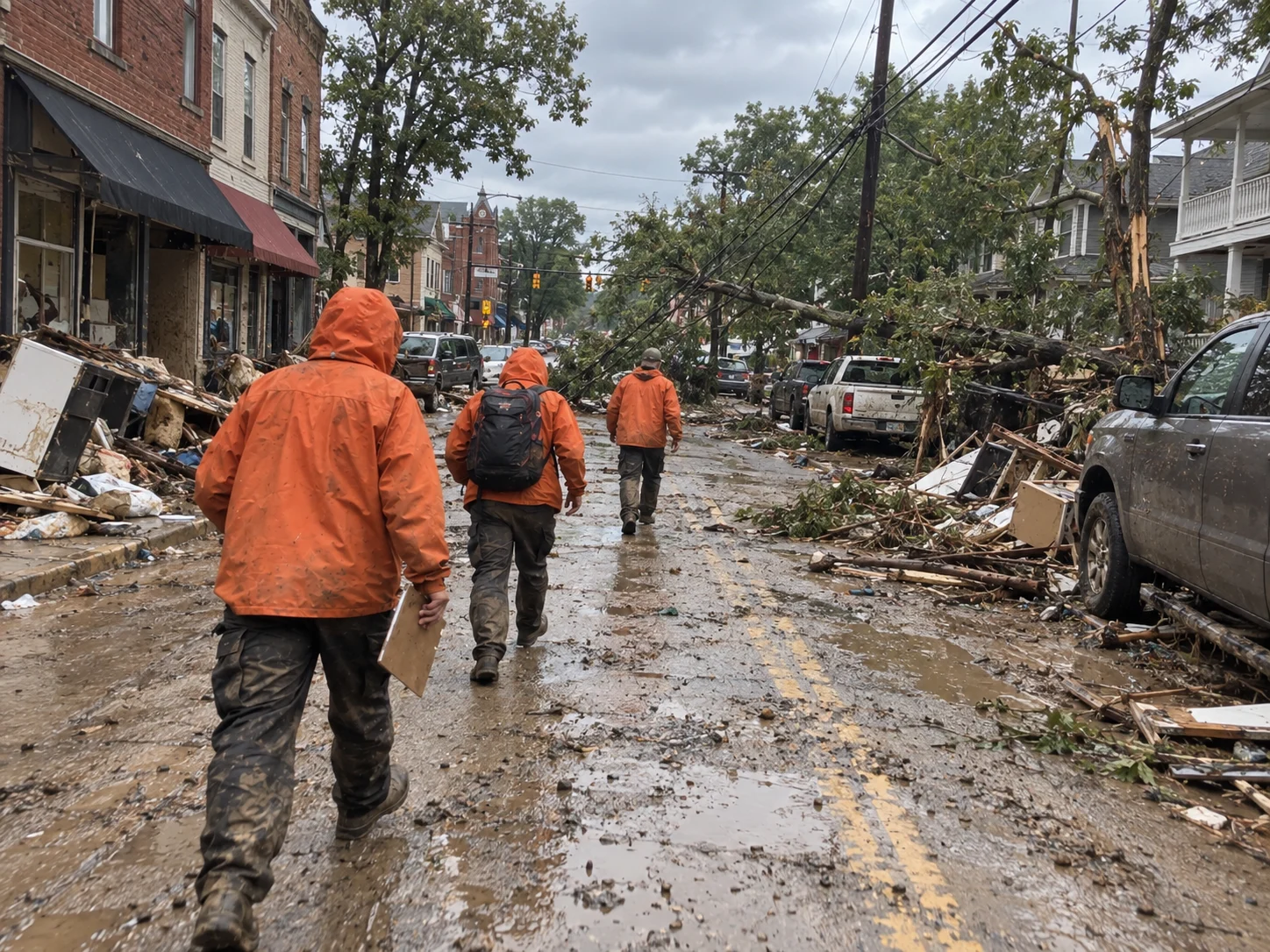

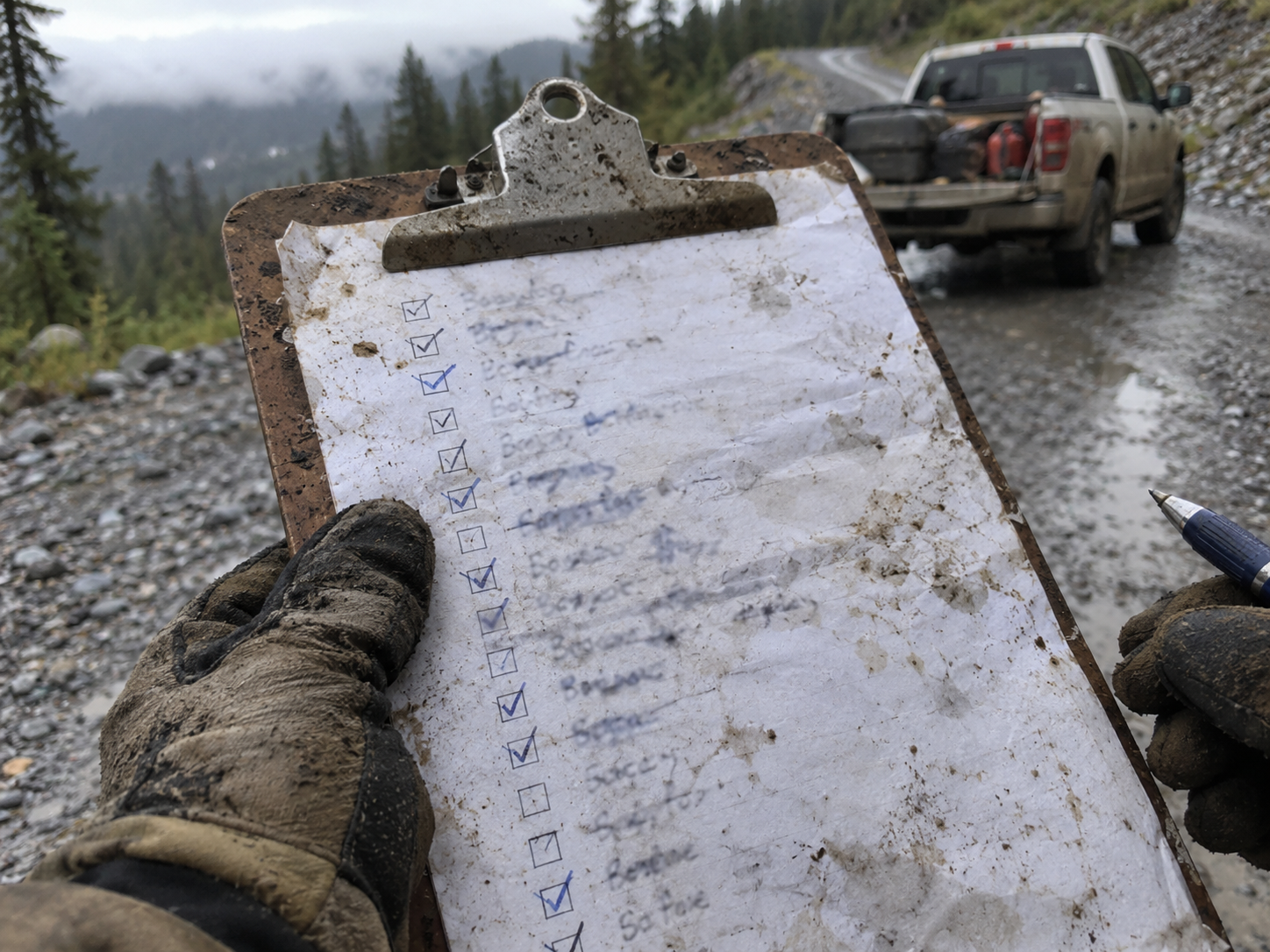
Three days after Helene, they handed me a clipboard with 41 names on it.
Every name was someone a family member had reported missing: somebody's mother, a grandfather, a brother who hadn't called.
The roads up the mountain were washed out or buried under trees. So we parked where we could and walked in.
The first house on my list belonged to a man in his 70s.
I was expecting the worst.
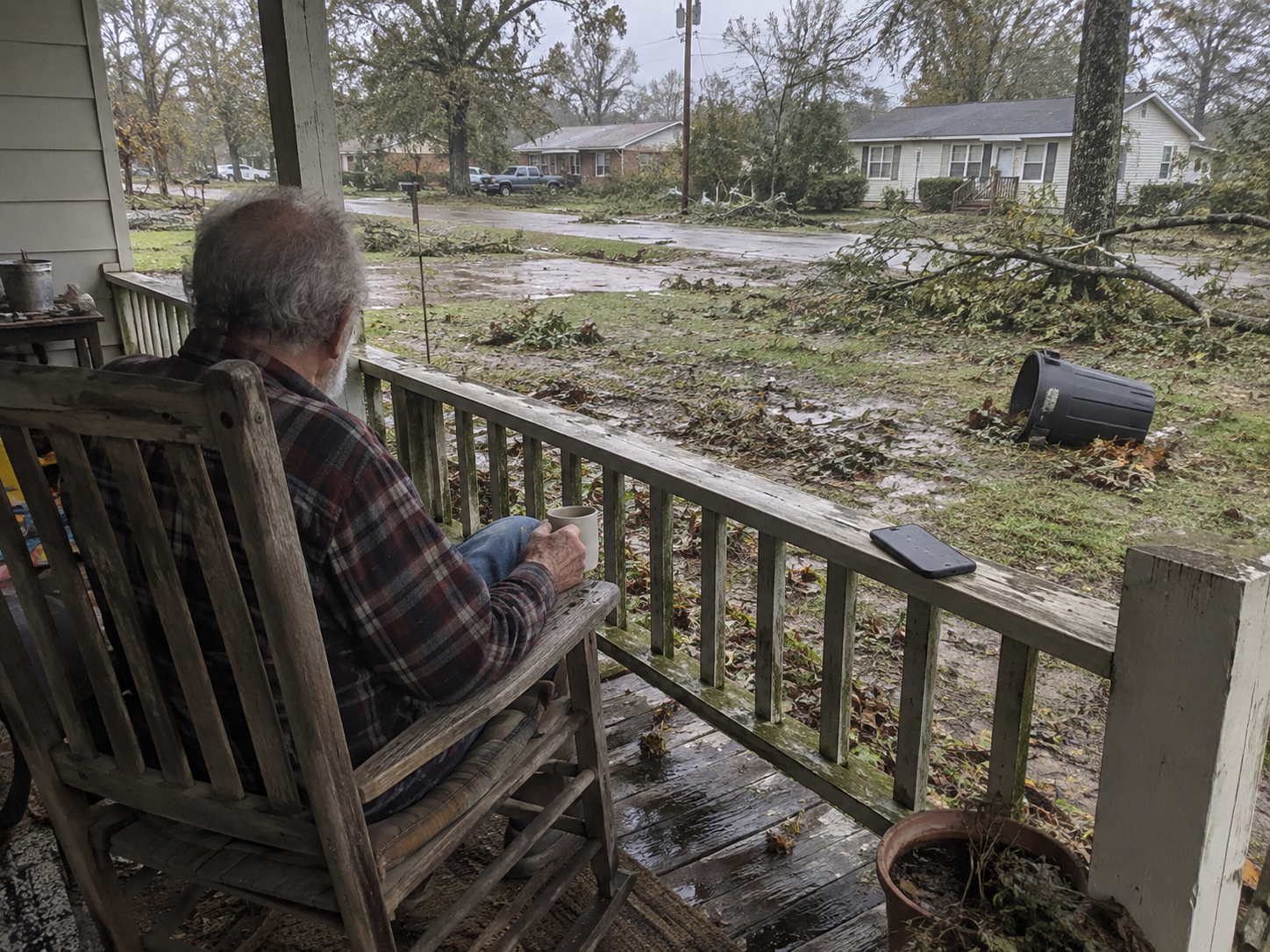
But when I walked up, he was sitting on his porch with a cup of coffee.
He had food, water, a wood stove and a generator in the shed. He'd been through storms before.
I told him his daughter in Ohio had reported him missing.
He went quiet.
Then he said, "I tried to call her. The phone's been dead since the second day, and there's no signal up here anyway."
He'd been fine the whole time.
His daughter had spent 3 days thinking he was dead.
It Was the Same Story at Almost Every Door
I went down that list for two days.
Name after name, I found people who were okay. They just had no way to tell anyone.
Not every door had good news, though.
Helene killed more than 100 people in North Carolina.
That's what made the silence so hard.
The families waiting had no way to know which news was coming.
When we got back down to a spot with signal, I started calling them.
I'll never forget one woman. I told her, "Your father's fine. He's on his porch with a cup of coffee."
She couldn't speak. She just cried.
And it wasn't just my list.
In Buncombe County alone, about 600 people were listed as unaccounted for, in what one local mayor called a total cell phone blackout.
One family I read about later had already filled out a missing-person form for their relatives, including their young granddaughter. 28 hours later, a voice message came through. They were stranded, but okay.
"The relief we feel is overwhelming," they wrote.
The Part Nobody Prepares For
On the drive home, I kept thinking about that man on the porch.
He'd done everything right. Food, water, a wood stove, a generator in the shed.
He'd prepared to stay alive, but not to stay reachable.
Almost nobody on my list had.
Then I thought about my own mom. She's 74 and lives alone, 2 hours from me.
If her power went out tonight and didn't come back for 3 days, how would I know she was okay?
I wouldn't. I'd be the one calling a number that doesn't ring, and filling out the form.
That night I sat at my kitchen table and worked out why all those phones went silent.
The next morning, I changed what I keep in my truck, and what I keep at my mom's house.
Why All Those Phones Went Silent
Your phone needs the power grid twice.
First, to charge.
When the power goes out, every outlet in your house is dead. Your phone can't charge, and the battery you have is all you've got.
Second, to connect.
Cell towers run on power too. They have backup batteries, but those only last so long.
After Helene, about a quarter of North Carolina's cell sites went down, and in the hardest-hit areas, fewer than 1 in 10 were fully working.
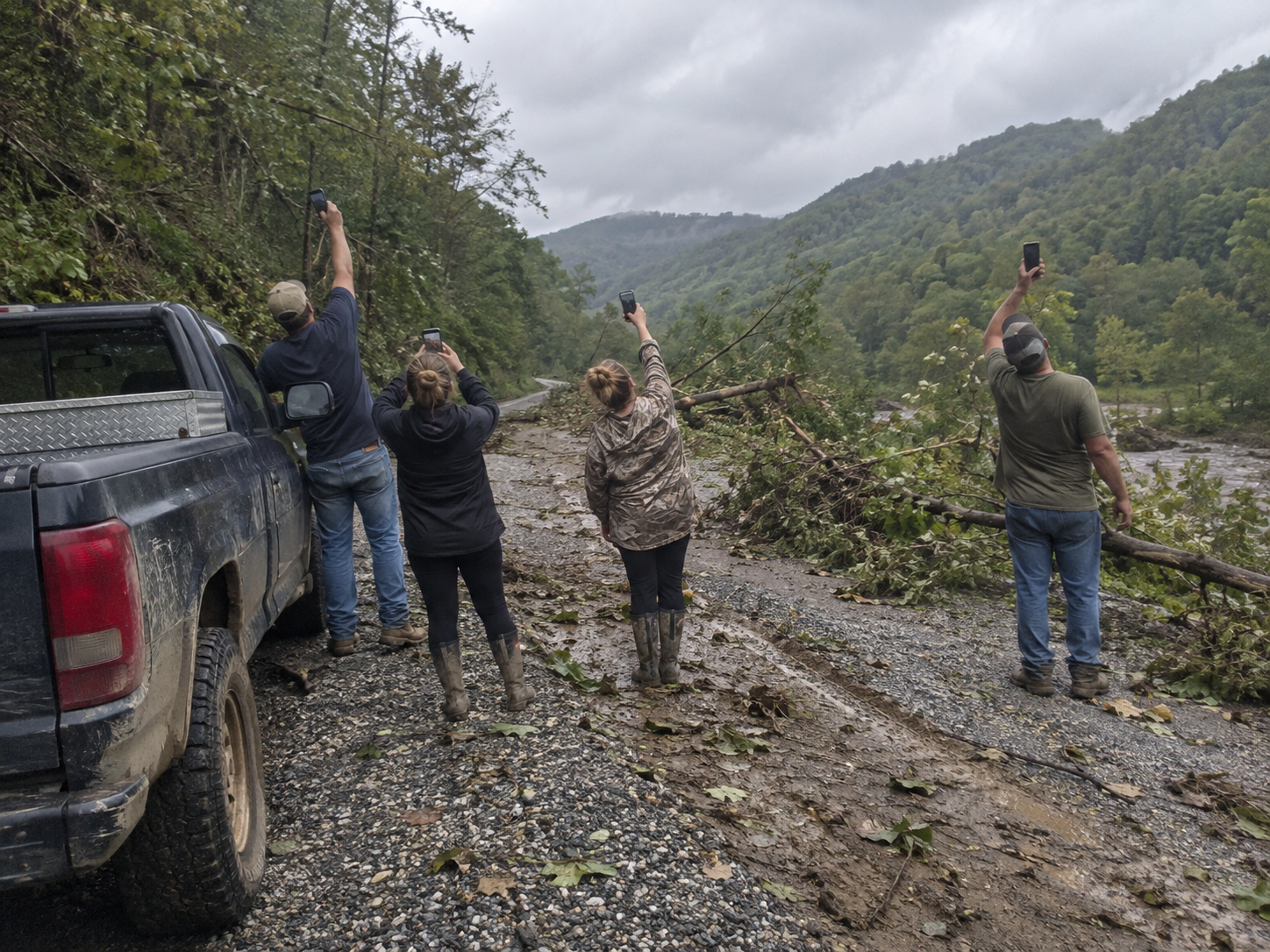
Signal comes back in patches.
A tower gets a generator, or a crew rolls in a portable cell site.
People find one spot at the end of a road or up on a hill with a bar or two. Many phones can even text straight to a satellite when there's no tower at all.
The man on the porch never got to use any of that.
By the time a signal came back, his phone had been dead for days.
And he had a generator in his shed.
So why didn't he just charge it?
Why His Backups Didn't Help
I asked him that.
He said, "The gas was for the freezer and the well pump. I didn't know how long this would last. And there was no signal anyway, so what was the point?"
He wasn't wrong. It's what almost everyone does.
A generator runs on fuel, and fuel runs out.
The freezer full of food comes first, and the phone comes last.
And even with a charged phone, the signal was never at his house. It was at the end of the road, or up on the hill.
You can't carry a generator up a hill.
His car couldn't help either. The road was blocked, and it burns the same fuel.
He even had a regular power bank in his kitchen drawer.
It was dead, and the only way to recharge it was the wall outlet that had no power.
And charging your phone before the storm? A full battery lasts about a day. After Helene, the outages lasted weeks.
None of that was his fault. Those things just weren't made for this.
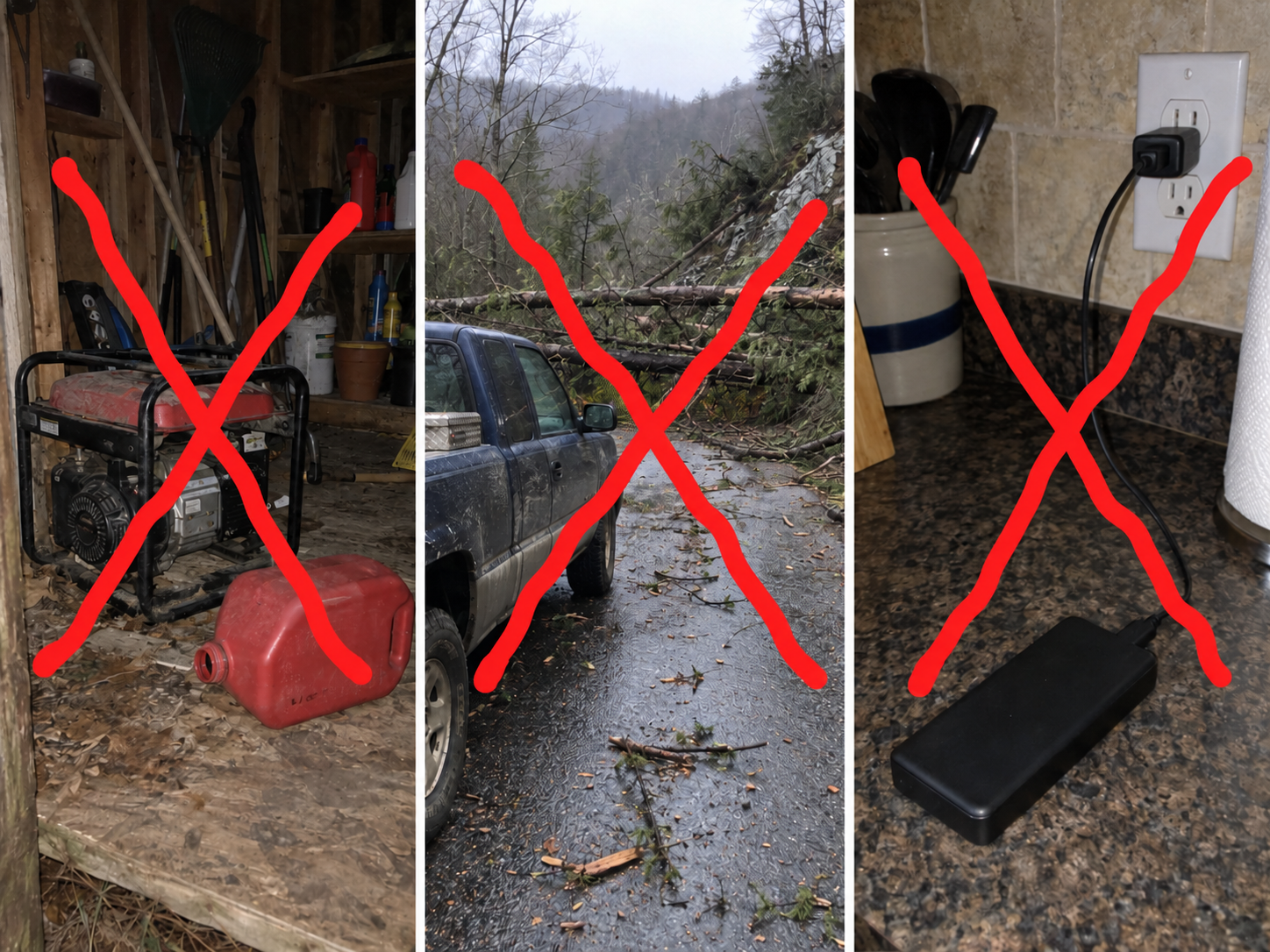
So on the drive home, I made a list of what would have actually helped him:
- ✓ Already charged the day the power goes out, even after sitting in a drawer
- ✓ Refills from daylight, with no outlet and no fuel
- ✓ Fits in your hand, so it goes wherever the signal is
- ✓ Simple enough for a 74-year-old to use without calling anyone
It Doesn't Take a Hurricane
You don't have to live in the mountains for this to happen to your family.
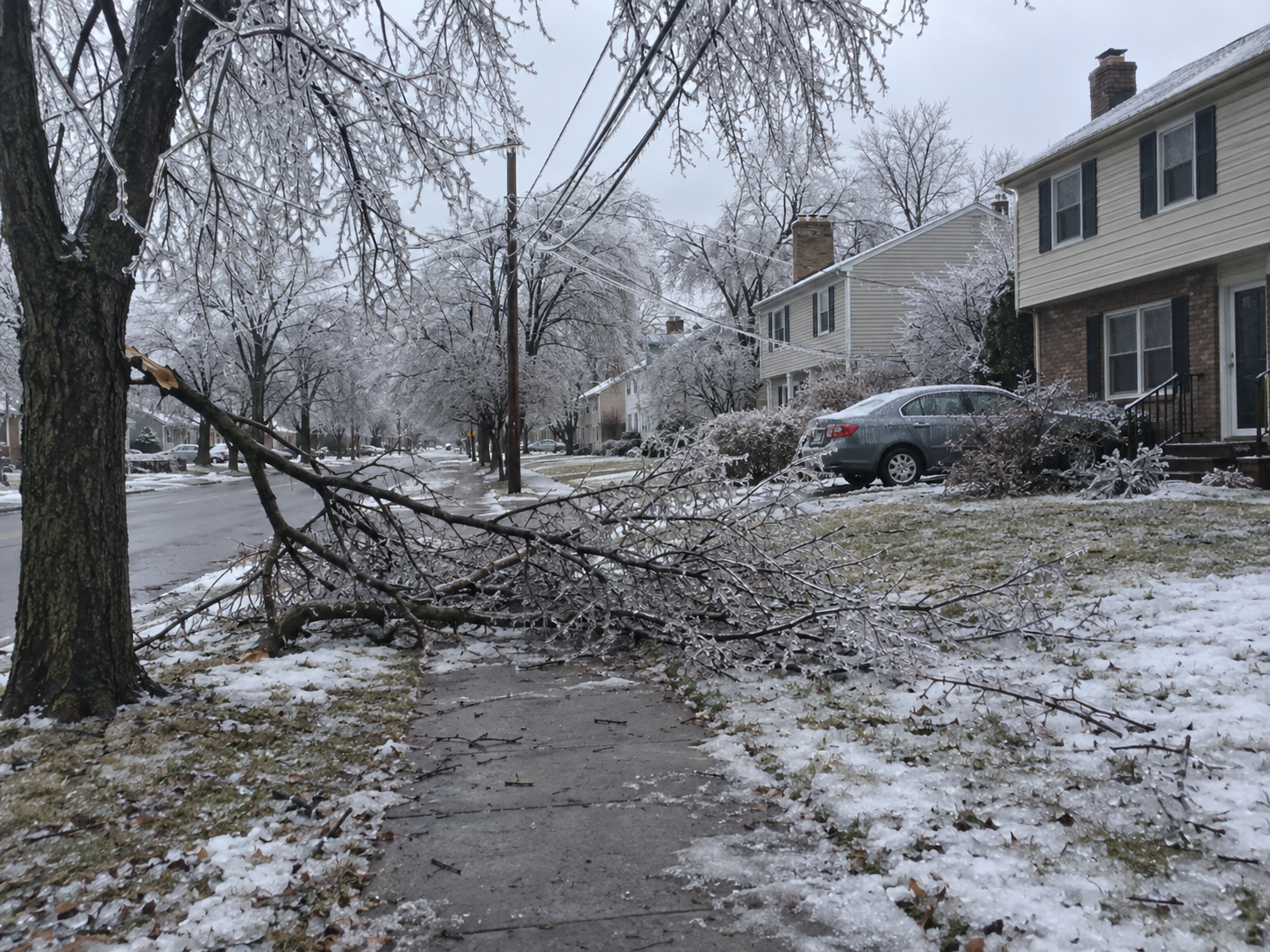
- An ice storm.
- A heat wave that overloads the grid.
- A car that hits the pole down the street.
Every year, storms and outages leave millions of American homes without power, sometimes for days.
And winter storm season is only weeks away.
What I Keep in My Truck Now
On my second day, I met a woman at the bottom of the mountain road.
She'd walked two miles down from her house. Her phone was dead. Her son in Charlotte hadn't heard from her since the storm hit.
"He probably thinks I'm dead," she said.
One of the linemen heard her. He walked to his truck and came back with a small black-and-orange power bank. He plugged her phone in and pointed up the road.
"Give it 20 minutes, then walk up to that bend. There's one bar of signal up there."
Twenty minutes later, she came back down. She was crying.
"I told him I'm okay. He'd been calling me for 3 days."
I asked the lineman what that thing was. He said, "I don't trust anything that needs the grid to work."
I'll be honest, I'd always thought those solar power banks were a gimmick. A panel that small can't charge much.
He said, "It's not for fast charging from 0%. It's so your devices are never empty."
Then he showed me. Charge it once from the wall, and the panel keeps it topped up in the sun. And if the outage drags on for days, it keeps adding charge back a little at a time.
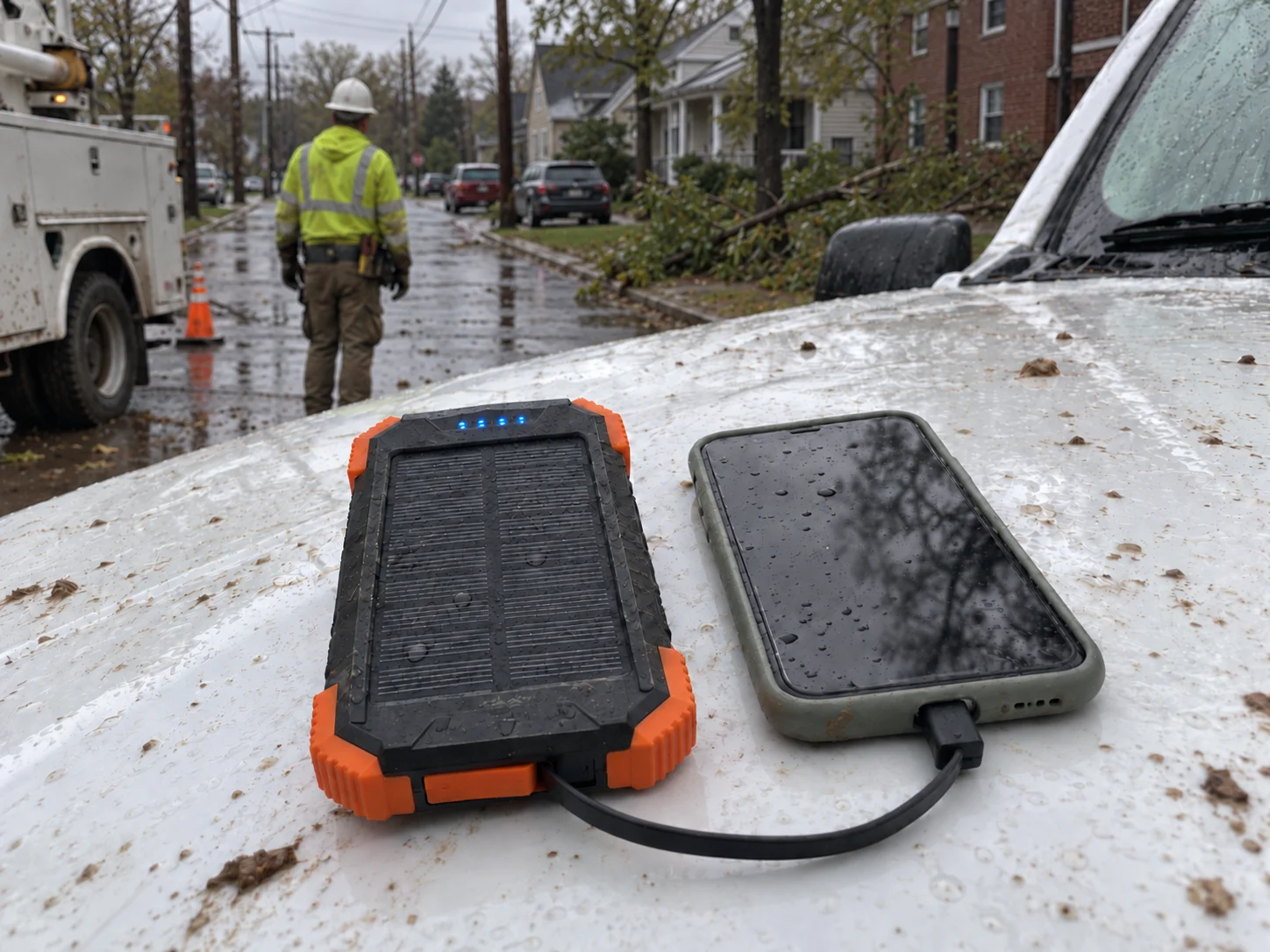
It's called the Rivanta® Emergency Power Bank, and it checks every box on my list:
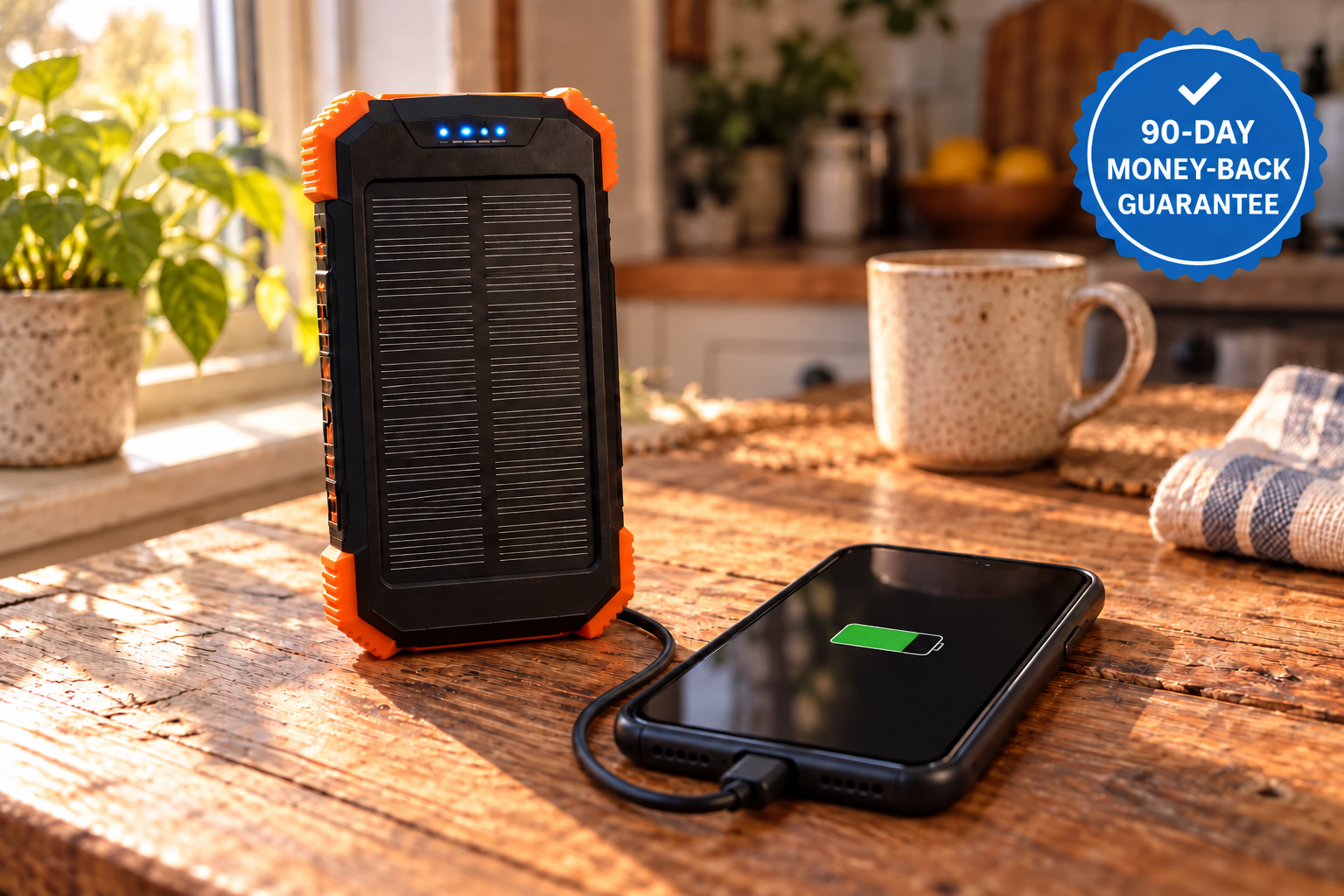
- ✓ Ready when you need it. Charge it once at home. It keeps its charge while sitting in a drawer, waiting for the power to go out.
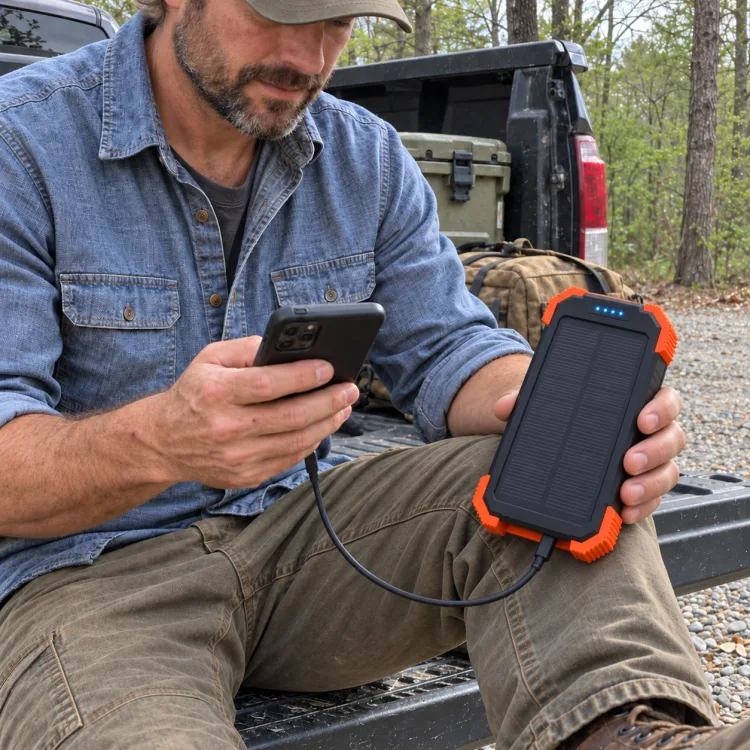
- ✓ Charges from the sun. Set it in the sunlight and it recharges devices with no outlet and no fuel.
- ✓ Small. It fits in your hand, so you can carry it wherever there's signal.
- ✓ Easy. Press one button and plug in your phone. My mom learned it in 30 seconds.
Here's what happens when you take one out of the drawer:
It also charges up to 3 phones at once, takes a dead iPhone to about 65% in 30 minutes, and it's splashproof and shockproof.
I keep one in my truck now, and one at my mom's house.
What Happened When the Next Storm Hit
I gave my mom hers that October. I showed her the button, charged it with her, and put it in her kitchen drawer where she used to keep her flashlight. Rivanta has one built in.
She rolled her eyes a little. "Another gadget."
I didn't think about it again until February.
An ice storm took out power across her whole county. The news said it could be days.
At 7:12 the next morning, my phone rang.
"Power's out. I'm fine. I've got the thing you gave me plugged in, and I used its little light to find my way to the kitchen. Don't you dare drive out here in this."
She was without power for two days. She called me every morning and every night.
I didn't spend one minute wondering.
Why I Didn't Just Buy One
Here's what that week taught me.
It takes 2 phones to make a call.
My phone being charged doesn't help if my mom's phone is dead. She can't call me, and I can't reach her.
So I bought 3.
One for my truck, in case I'm out when it happens.
One for my mom. It sits in her kitchen drawer.
One for my daughter. She's at college, 3 hours away.
Now when the power goes out, I know my mom can call me, and my daughter can text me that she's okay.
A generator costs over $1,000 and only helps the house it's parked at.
For a lot less than that, everyone I worry about has their own.
1 for you
3 for you, your parents and your kids. Buy 2, get 1 free.
5 for the whole family: your household, your parents across town, and the car. Buy 3, get 2 free.
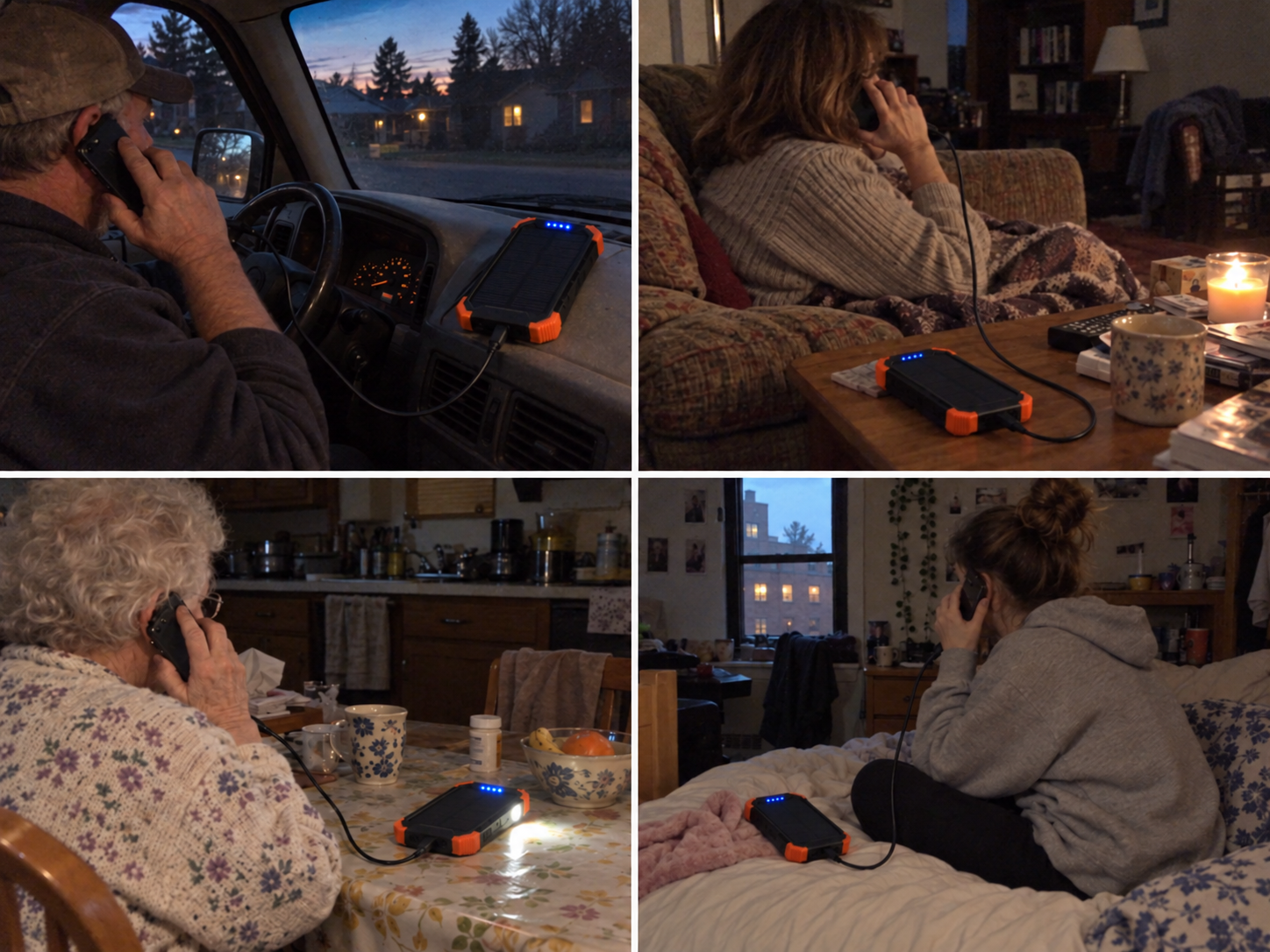
What people say after the power actually went out
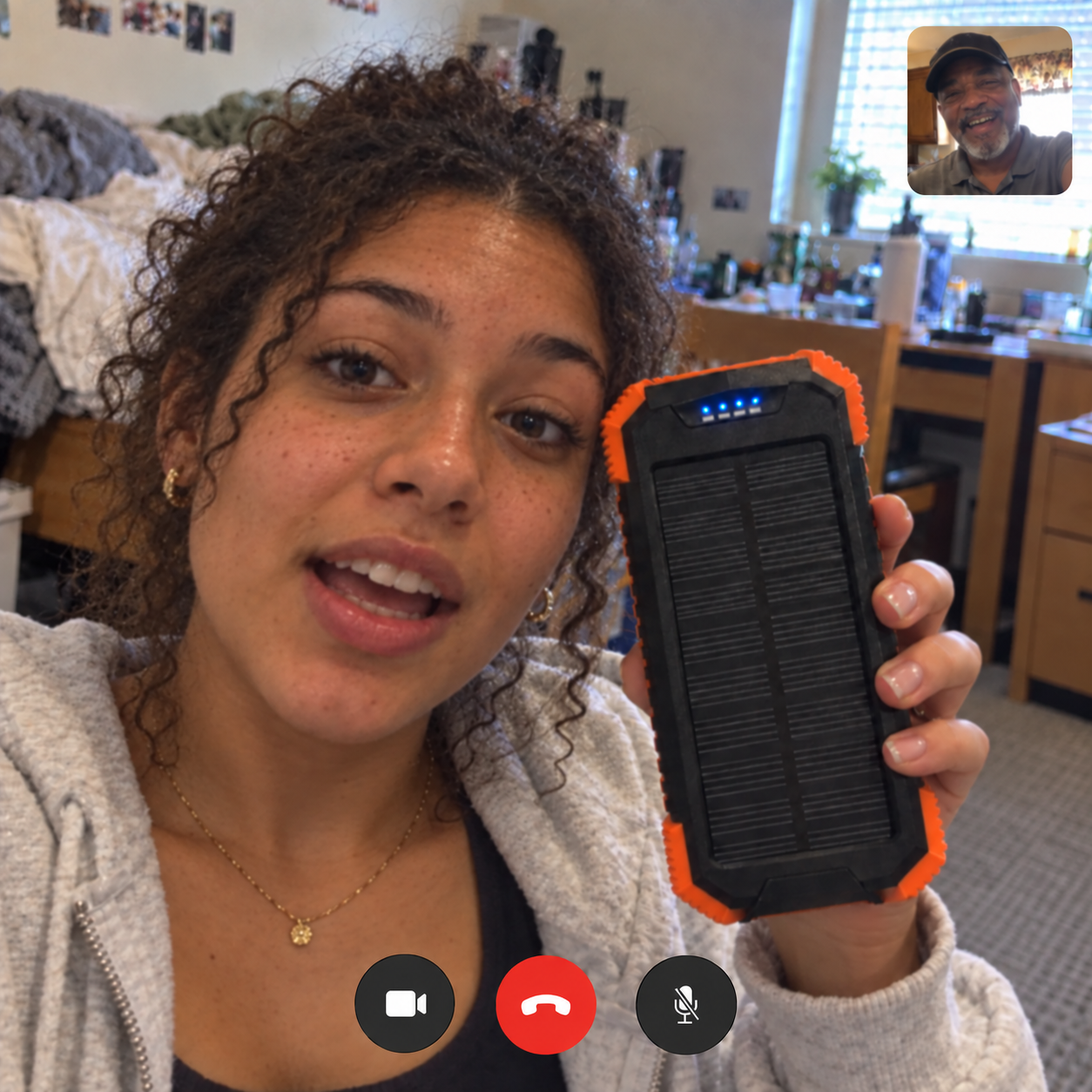
"Sent one to my daughter at college"
"She's three hours away and doesn't think about this stuff. I sent her one and made her show me the four lights on FaceTime. When her dorm lost power in March, she texted me before I even heard about it."
Mike D. · Verified Buyer
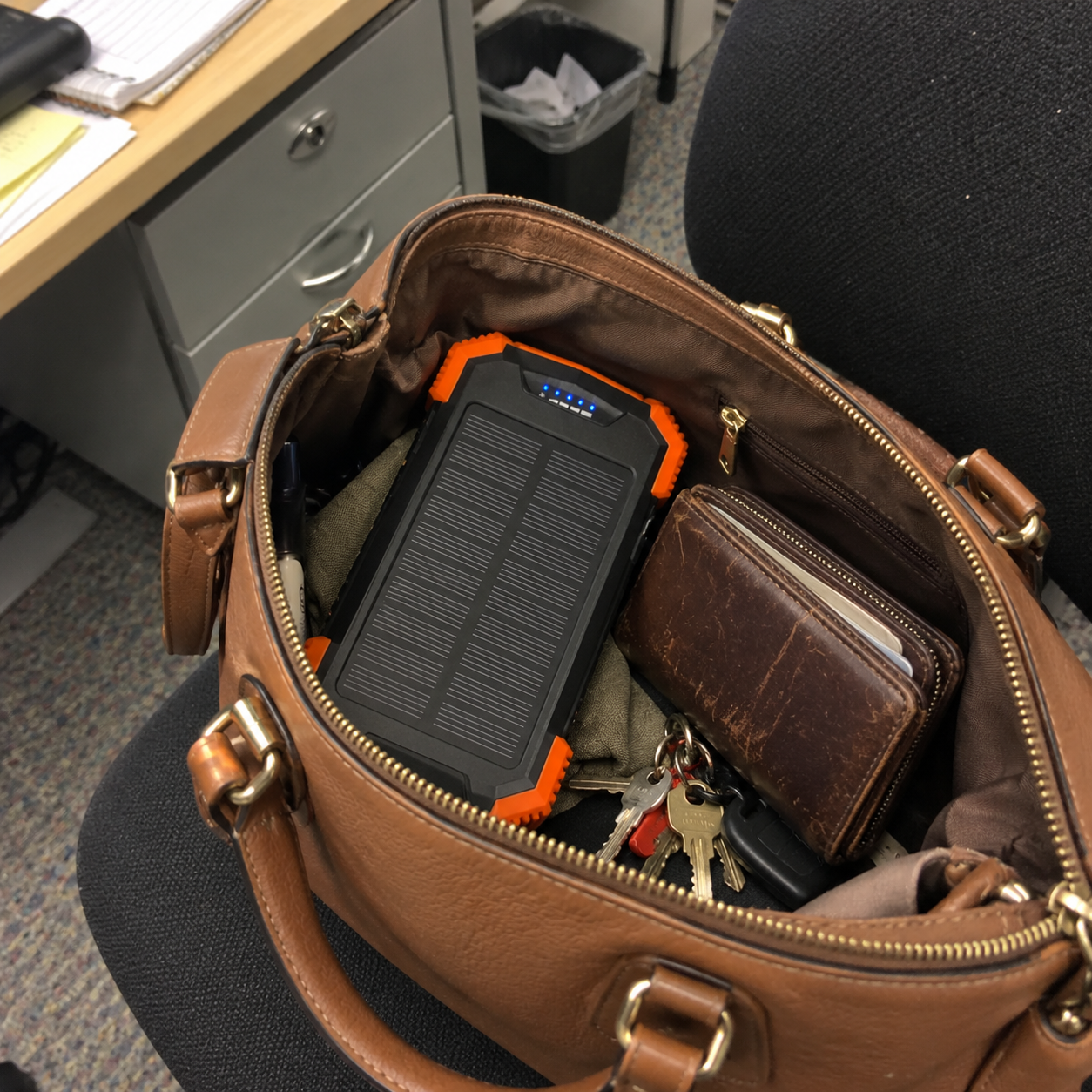
"Small enough to live in my purse"
"I keep it in my purse now. When the storm hit while I was at work, I was the only one in the office with a charged phone by evening."
Linda P. · Verified Buyer
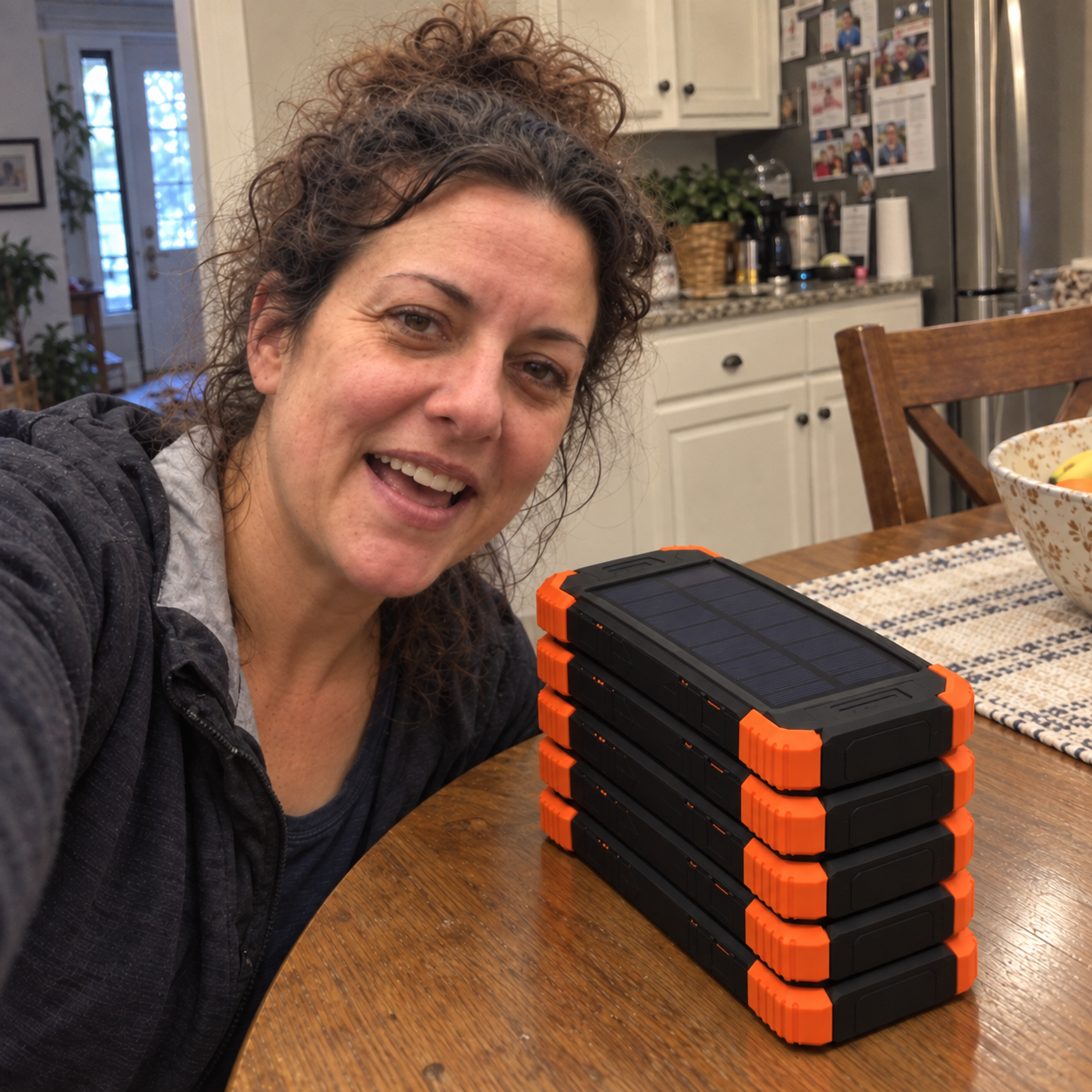
"Ordered the 5-pack after Helene"
"After watching what happened in North Carolina, I got the 5-pack. One for each of my kids, one for my parents and one for the car. When the ice storm hit in January, my mom called me from her kitchen before I'd even seen the news. Best money I've spent."
Sandra K. · Verified Buyer
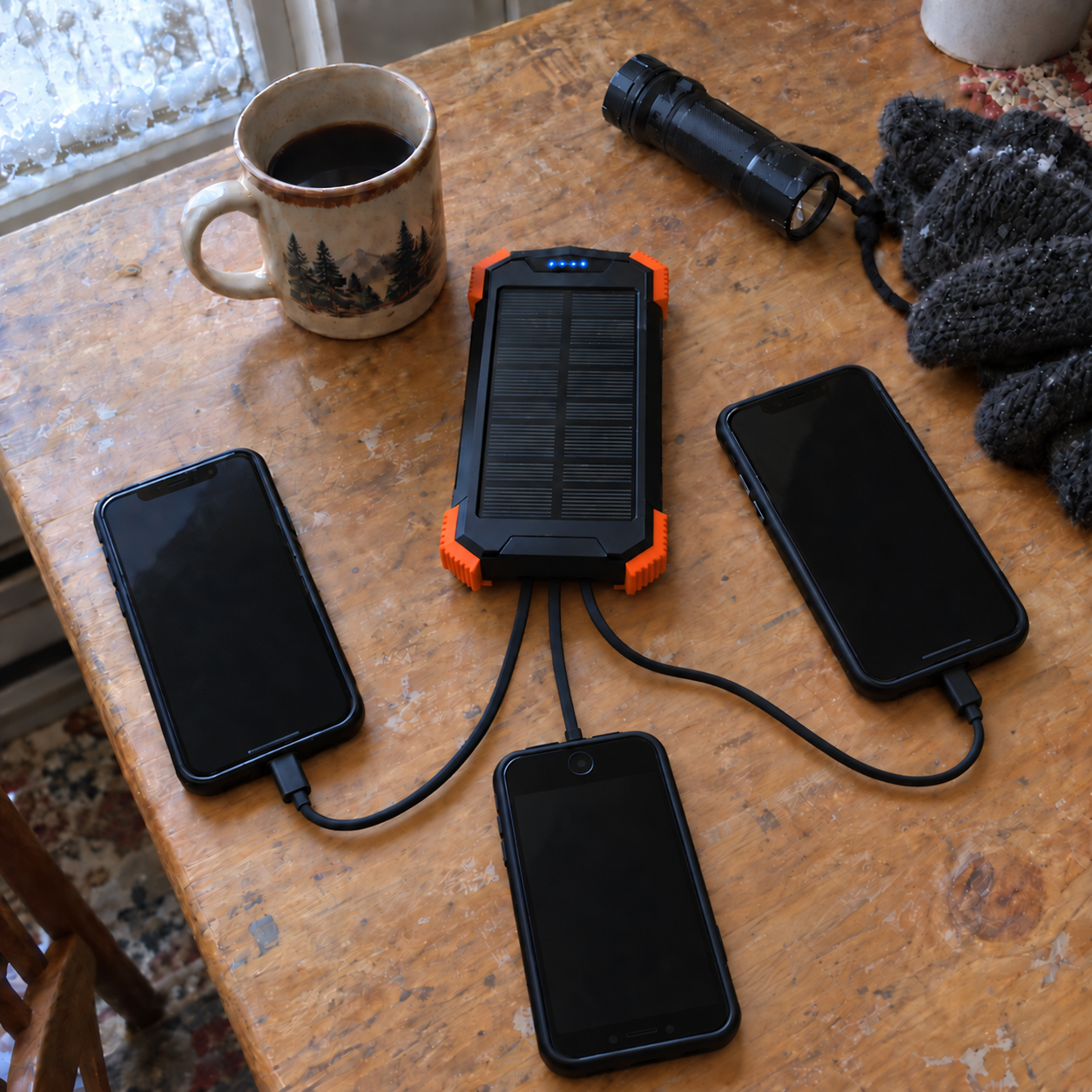
"Charged all three of our phones at once"
"Ice storm took the power out for two days. My husband, my son and I all plugged into it at the same time at the kitchen table. Nobody had to fight over it."
Rhonda S., · Verified Buyer
"My dad called me during the outage"
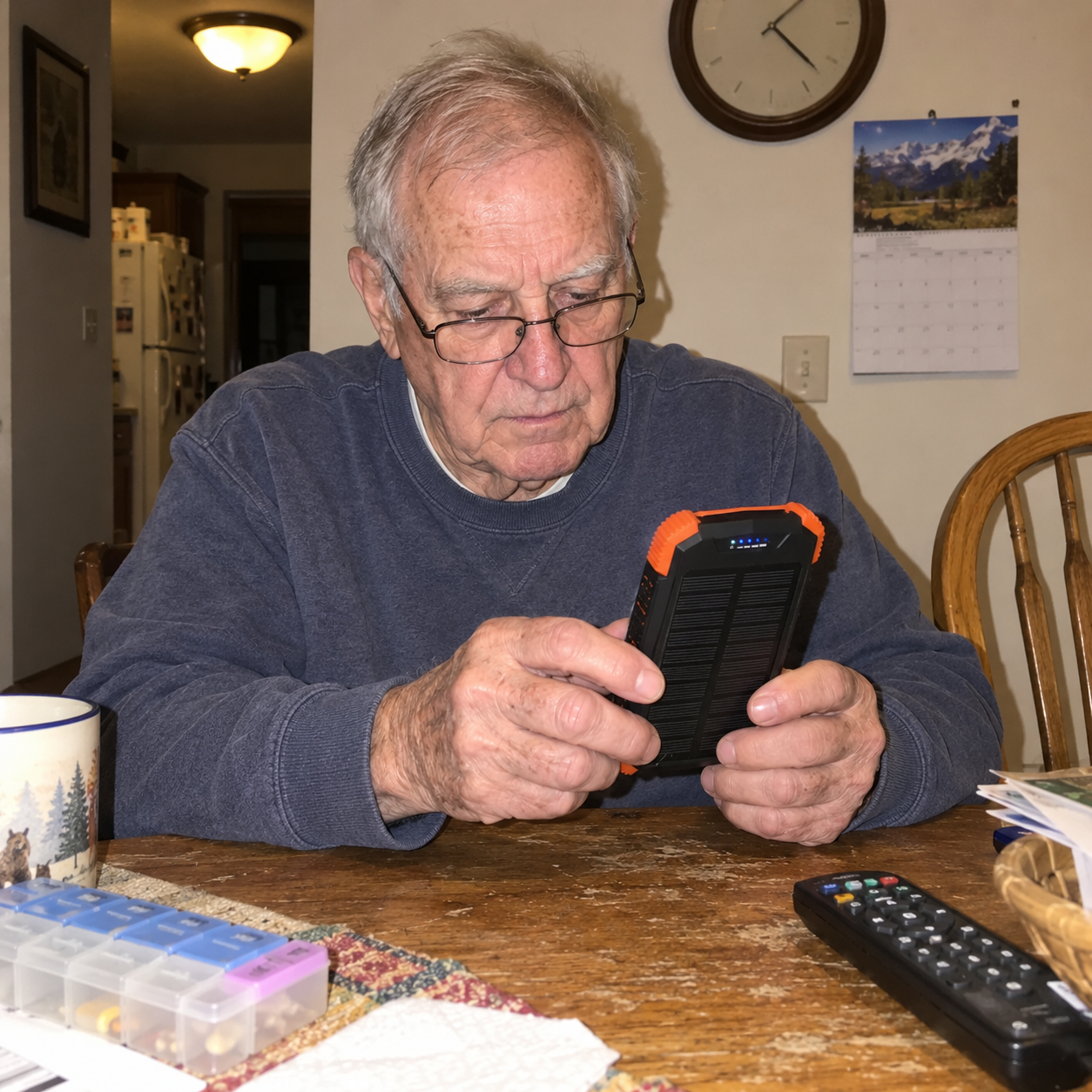
"My dad is 78 and lives by himself. I gave him one, showed him the button, and put it in the drawer next to his flashlight. When his power went out in August, he called me. That's all I wanted."
Daniel R. · Verified Buyer
The Next Time the Power Goes Out
Winter storm season starts in a few weeks. Nobody knows which town gets hit first.
It only takes one storm, and you'll be on one end of the phone or the other.
This time, picture it going differently.
The power goes out. Your mom opens her kitchen drawer, presses one button and calls you.
"I'm okay. Don't worry about me."
You won't be the one filling out a form. You handled it weeks before, on a normal Tuesday.
That's not prepping. That's just looking after your family.
Here's what I'd tell you if you were my own sister.
Get 5. One for you, one for your spouse, one for the car, one for your parents and one for the kids.
Charge them once, show everyone the button, and put them where they'll be.
You've got 2 options. You can close this page and hope your phone, and your mom's, are both charged the night the next storm hits.
Or you can spend a few minutes now, and never be the one filling out a form.
And there's no risk in trying it. Every order comes with a 90-day money-back guarantee. Charge it, plug in your phone, put it in the drawer. If you're not happy with it for any reason, send it back and get every dollar back.
ONE FOR EVERY PERSON YOU'D WORRY ABOUT
BUY 3, GET 2 FREE
Covered by our 90-Day Money-Back Guarantee