Top Story · Grid · Fuel · Family Preparedness
Four Signs War Could Break Out in the United States
And What Government Officials Are Quietly Doing to Prepare Their Families for a Major Emergency

Estimated 5-7 Minute Read
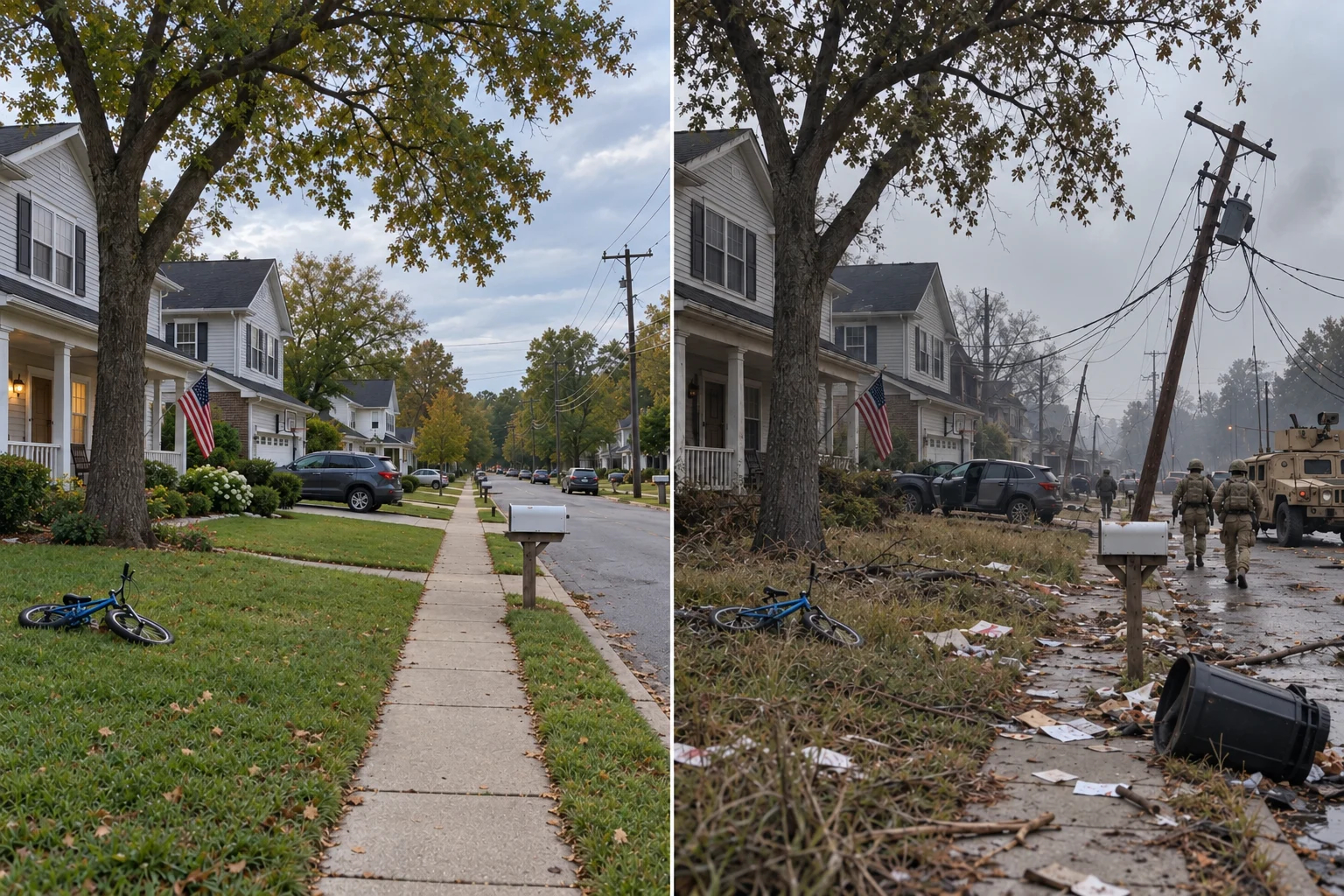

Sign #1: Iran Just Rejected Our Peace Treaty
Iran has now rejected multiple attempts at peace negotiations.
This week at the United Nations, Iran's president told the world his country "will never bow our head." Then Iran said there would be no deal until America lifts its blockade.
When a nation keeps saying "no" to diplomacy, experts say it usually means something bigger than just a disagreement.
Throughout history, wars have rarely started with a surprise attack. They start after the talking stops.
And Iran has already warned that if the U.S. strikes again, it will go after energy supplies.
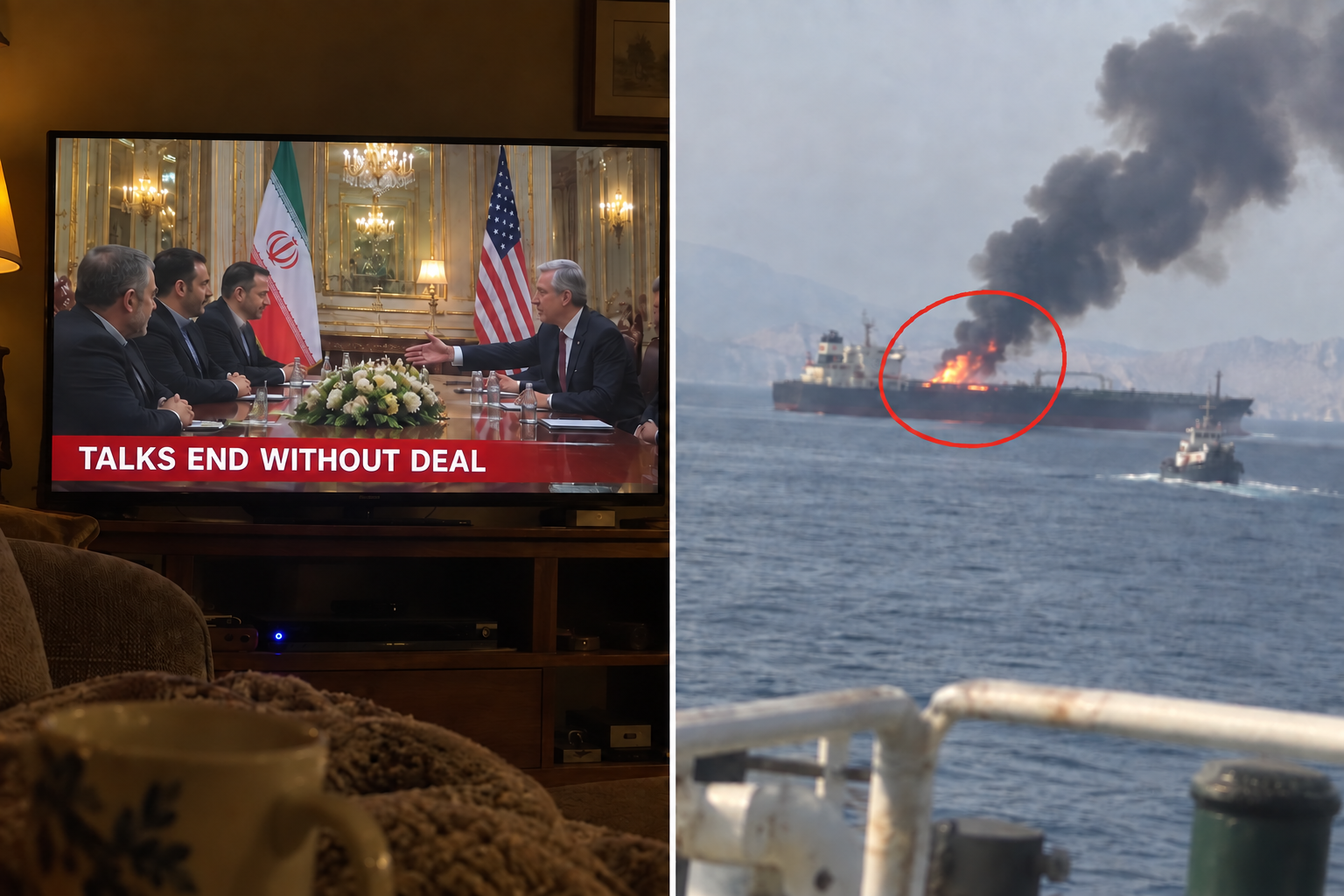
Sign #2: Sleeper Cells Are Already Inside the United States
According to public statements from federal officials, concerns about foreign-linked threats inside the United States have been growing.
"Last night, I instructed our Counterterrorism and intelligence teams to be on high alert and mobilize all assisting security assets needed." - FBI Director Kash Patel
People with ties to foreign governments may already be living here, working normal jobs and blending in until they're told to act.
That's what a sleeper cell is. And they wouldn't need to reach Washington to hurt us.
The grid that keeps your lights on runs through thousands of substations, most of them behind a chain-link fence.
In 2022, attackers fired rifles into two substations in Moore County, North Carolina. About 45,000 homes lost power, some for five days.
It took no EMPs, explosives and hacking. Just 1 person with a rifle.
And some attackers wouldn't even need to be here.
In April, an Iran-linked hacker group called Handala threatened that if the U.S. hit Iran's power grid, they would hit America's water, electricity and oil and "send your lives back to the Middle Ages."
It would be easy to write that off as talk, except this is the same group that wiped thousands of computers at Stryker, a major American medical company, and leaked the FBI Director's personal email.
That's exactly why more Americans are paying attention to warnings that once seemed impossible to imagine.
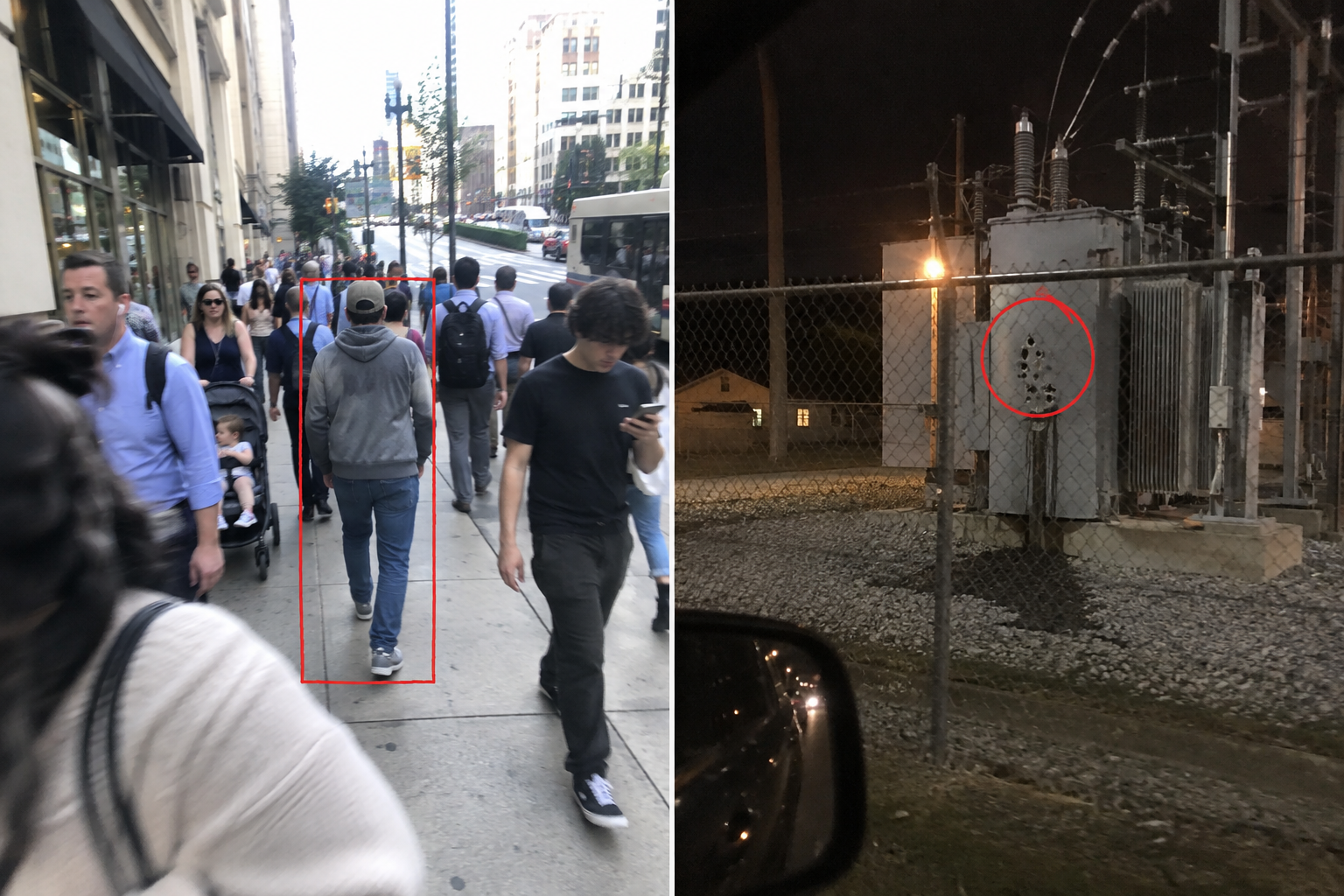
Sign #3: The U.S. Military Is Moving Resources Back Home
Military leaders keep stressing the need to protect critical infrastructure here at home.
While most Americans are watching what's happening overseas...
The resources that keep this country running are being pulled back home.
The U.S. has seized three Iranian oil tankers.
Right now, they're quietly sailing toward America with nearly 6 million barrels of oil on board.
At the same time, the President has said he supports a ban on diesel exports, so American fuel stays in America. Europe has already called it "a bad idea."
Countries don't keep their fuel at home when they're confident there's plenty to go around.
And you can already see why at the pump. Diesel just hit the highest price in American history, over $6.50 a gallon.
This week, Iran's parliament speaker openly mocked Americans for it, promising "high gas prices, diesel shortages" to come.
When the enemy brags about what it's doing to your daily life, the war has already reached you.
Sign #4: Government Officials Are Quietly Stockpiling Solar Power Banks
Government agencies, emergency responders and the people who run critical infrastructure are all putting more into emergency preparedness.
And in any major disruption, one of their biggest concerns is reliable power.
When the grid goes down, it gets hard to communicate and hard to find out what's happening.
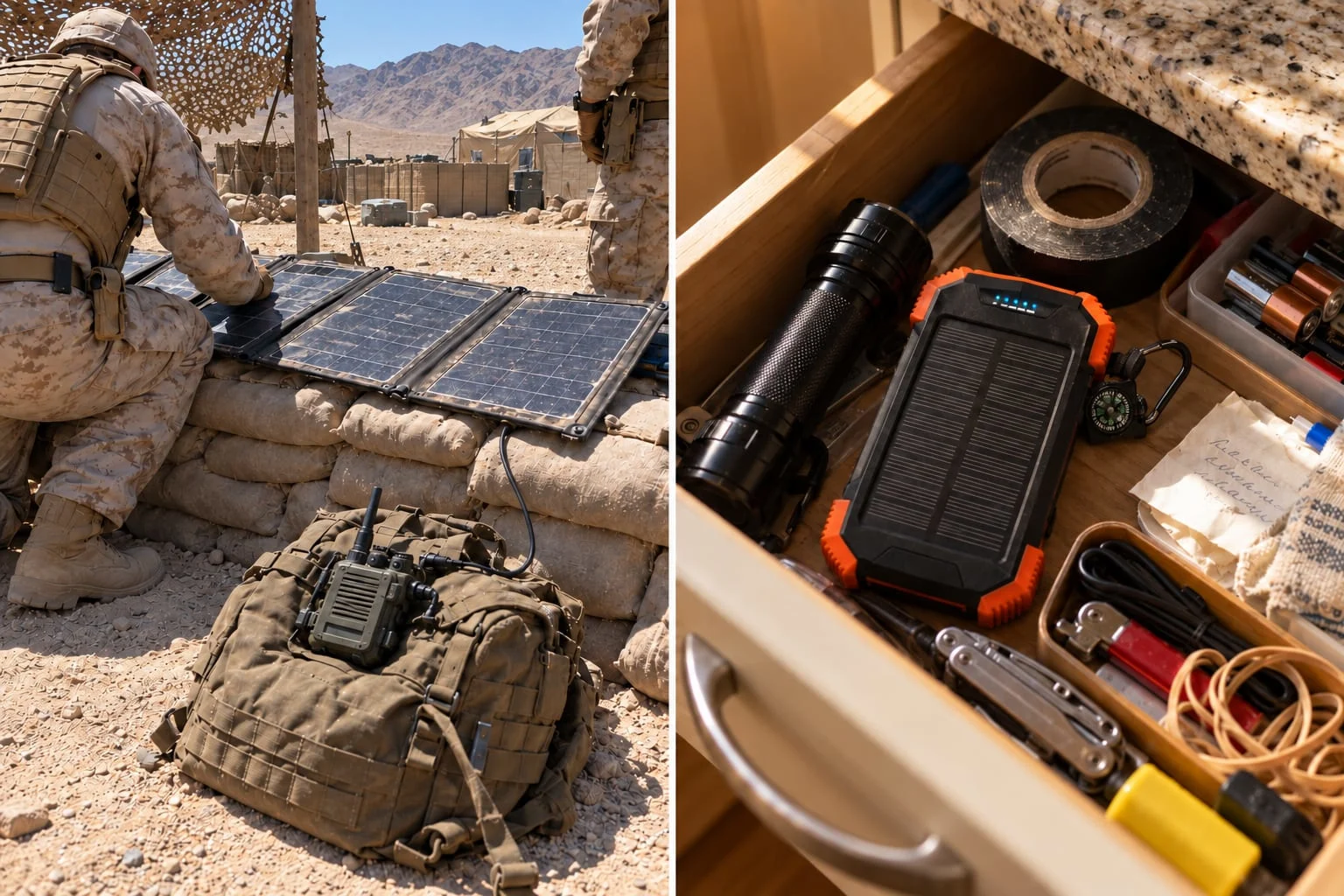
The military learned this long ago. Marines in the field carry portable solar chargers to power their radios, so they're not waiting on fuel or fresh batteries.
The people whose job is to see a crisis coming are quietly doing the same for their own families.
It isn't a conspiracy. Officials don't get rewarded for telling the public to get ready. They get blamed for starting a panic. So the public hears "have a plan" while they make their own moves.
The reality is simple: When the lights go out, the people who planned ahead are much better off than the people who didn't.
That's why more Americans are securing their own source of emergency power before they need it.
No One Knows Exactly What Will Happen Next
But history has shown that in any major emergency, one thing tends to disappear first:
Access to reliable power.
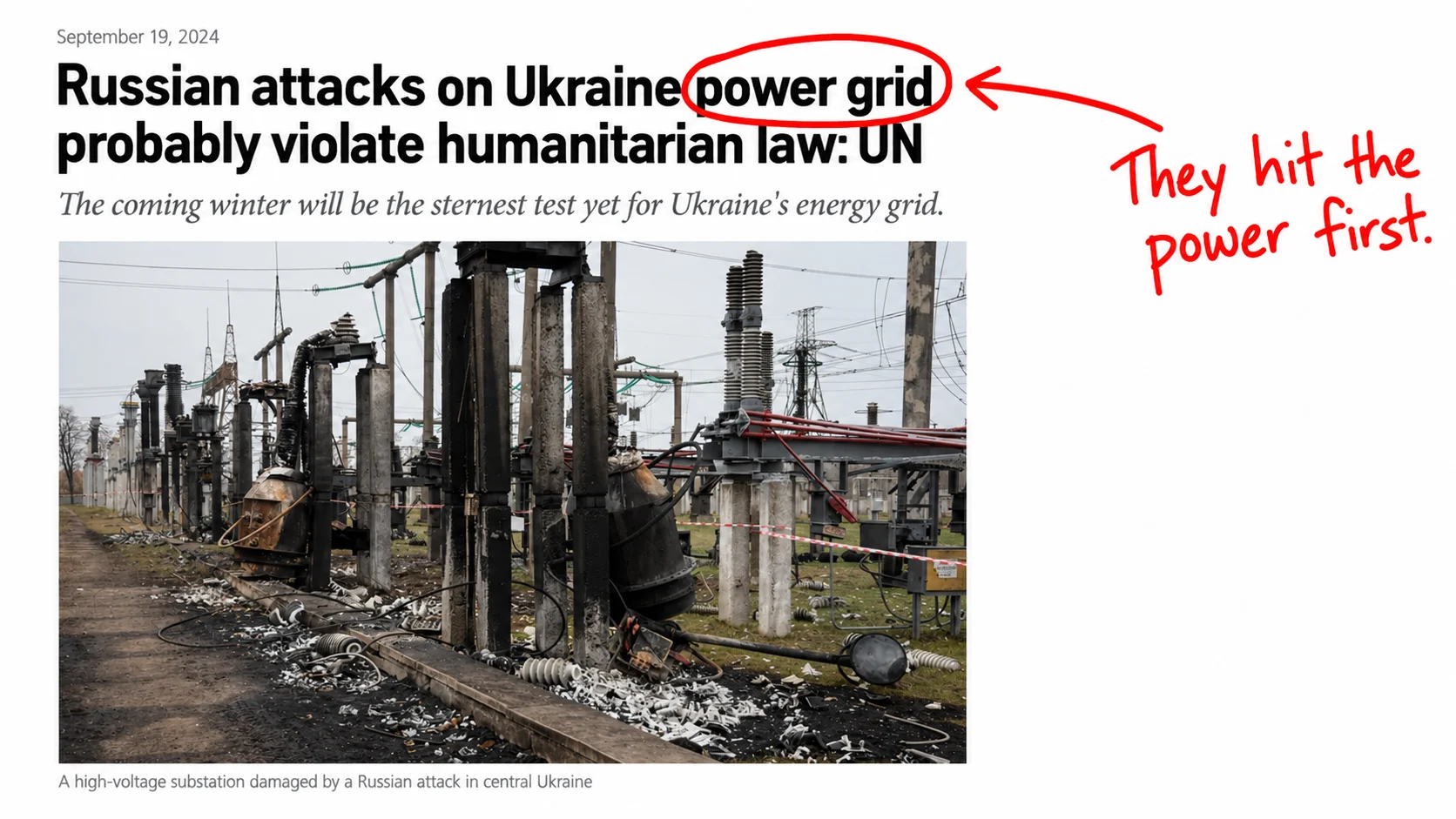
In a modern war, the power grid is one of the first targets.
Just look at Ukraine.
Since 2022, Russia has hit its grid again and again with missiles and drones:
- About half of Ukraine's power supply was knocked out.
- 12 to 16 hours a day without electricity in many regions at the worst points.
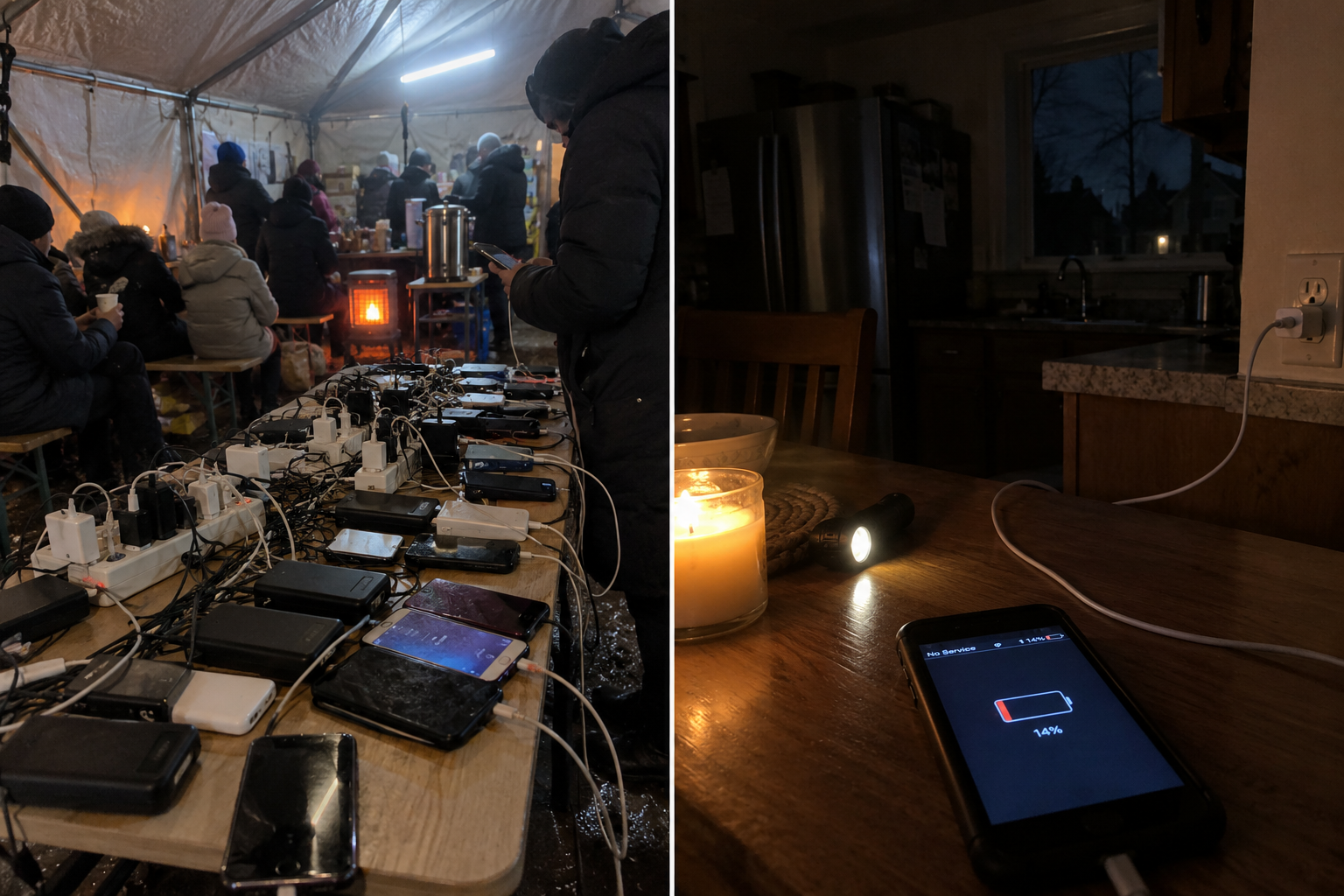
- Emergency centers opened where people could warm up and charge their phones.
Iran has already warned it would go after energy supplies.
And as you saw in Sign #2, knocking out a substation here doesn't take much.
When the power goes out, the first thing you reach for is your phone.
It's how you call your kids, check on your mom and find out what's happening.
With every outlet dead, every call and every text burns battery you can't get back.
And nobody can tell you when the power's coming back.
The One Thing Most People Overlook During An Emergency
Most people spend their time worrying about what might happen.
Very few spend time preparing for what comes next.
Whether it's a war, a cyberattack, a hurricane or a grid failure, the result is often the same: no power and no signal.
That's why the first thing most people say about their phone is: "If the grid goes down, the cell towers go down too. So what's the point?"
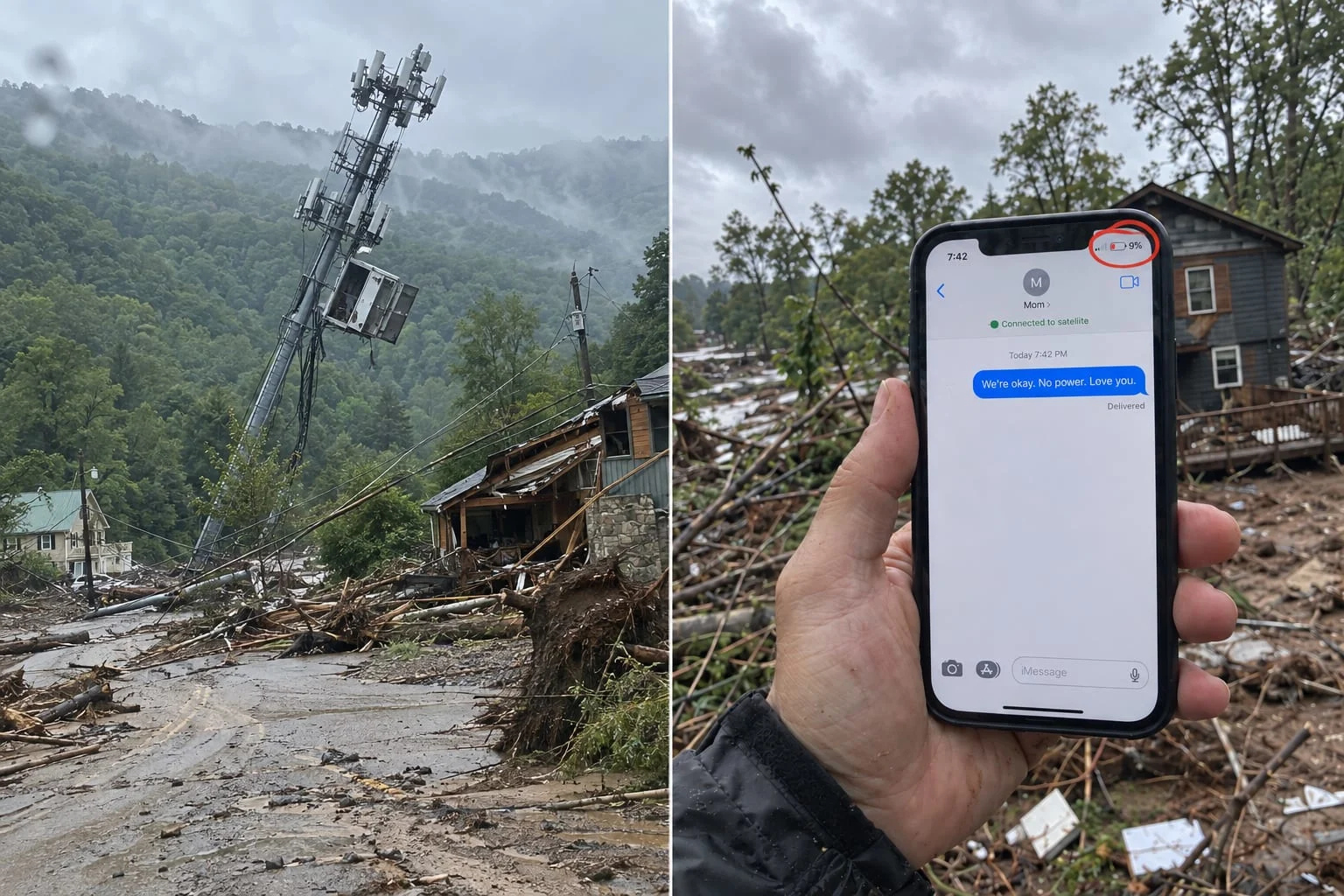
That's exactly what happened in North Carolina.
After Hurricane Helene, about a quarter of the state's cell sites went down. In the hardest-hit areas, fewer than 1 in 10 were fully working.
And people still reached their families.
Because most phones can now text straight to a satellite when there's no tower at all.
One Asheville man posted that everyone around him was getting messages in and out, calling it "literally saving lives." Another used it to tell his family in Georgia they were alright.
The catch is that it only works outside, under open sky, and it drains your battery fast.
So in a real outage, your power has to be where the sky is.
Why Most Backup Power Solutions Fail
Especially when you need them most.
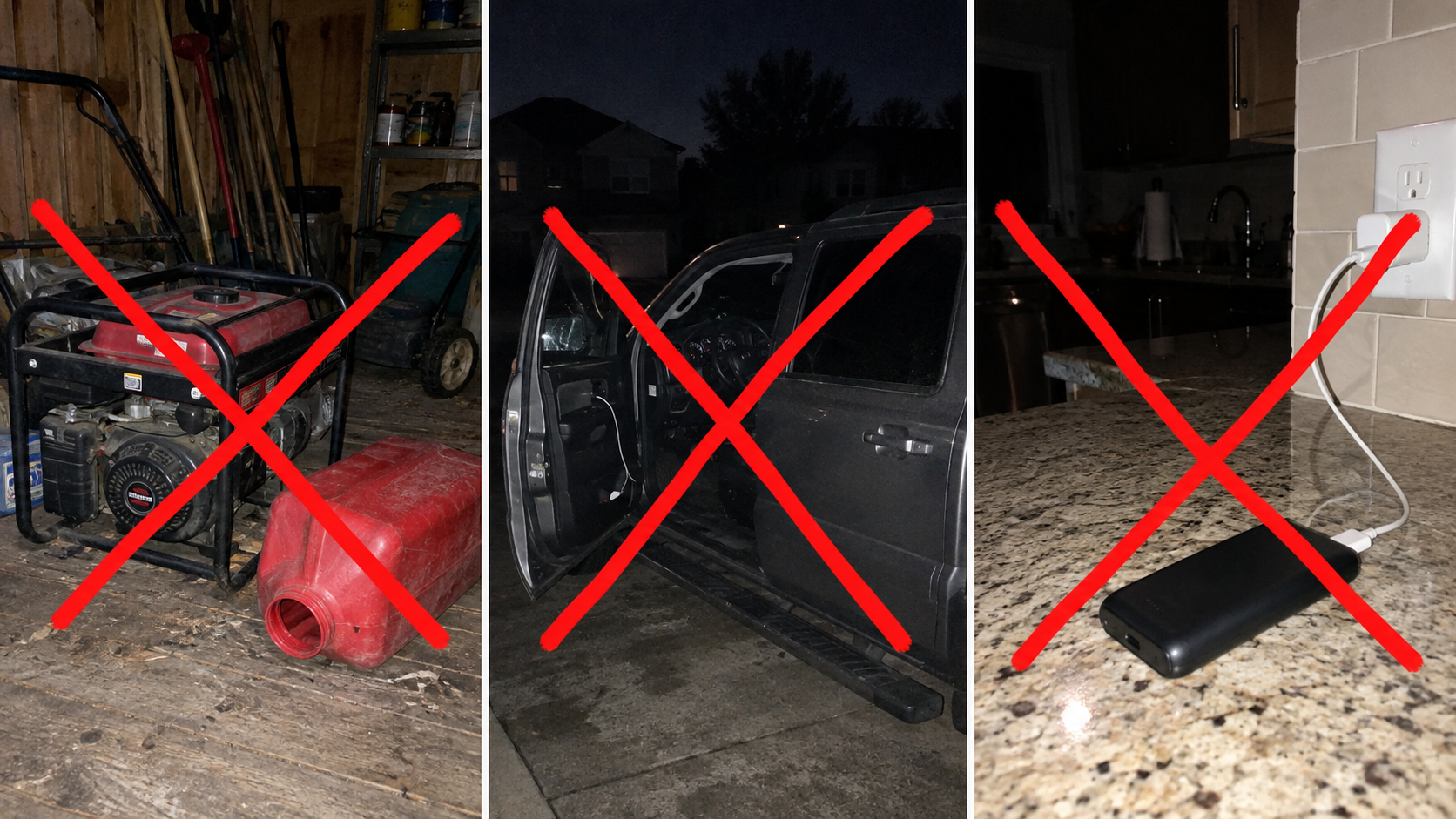
Most people already have some kind of backup. The problem is that each one either runs out, or keeps you stuck where the sky isn't.
A generator sits in the shed or the garage, and the sky isn't in the shed. It runs on fuel, which is a number that only goes down.
Your car has a roof, and a satellite can't see through it. It also burns the same fuel you'll want for driving.
A regular power bank is built for convenience, not emergencies. It gets you through a long flight, then it's empty, and the only way to refill it is the wall outlet that just went dead.
None of that is your fault. Those things just weren't built for this.
A generator buys you time. You still need something that keeps working after the time runs out.
So what would actually work? Something that:
- ✓ Is already charged the day the power goes out, even after months in a drawer
- ✓ Refills from daylight, no grid or fuel needed
- ✓ Fits in your hand, so it goes where the sky is
- ✓ Is simple enough for your mom to use without having to call you
That's Exactly What the Officials in Sign #4 Keep in the Drawer
It's called the Rivanta® Emergency Power Bank, and it checks every box above.
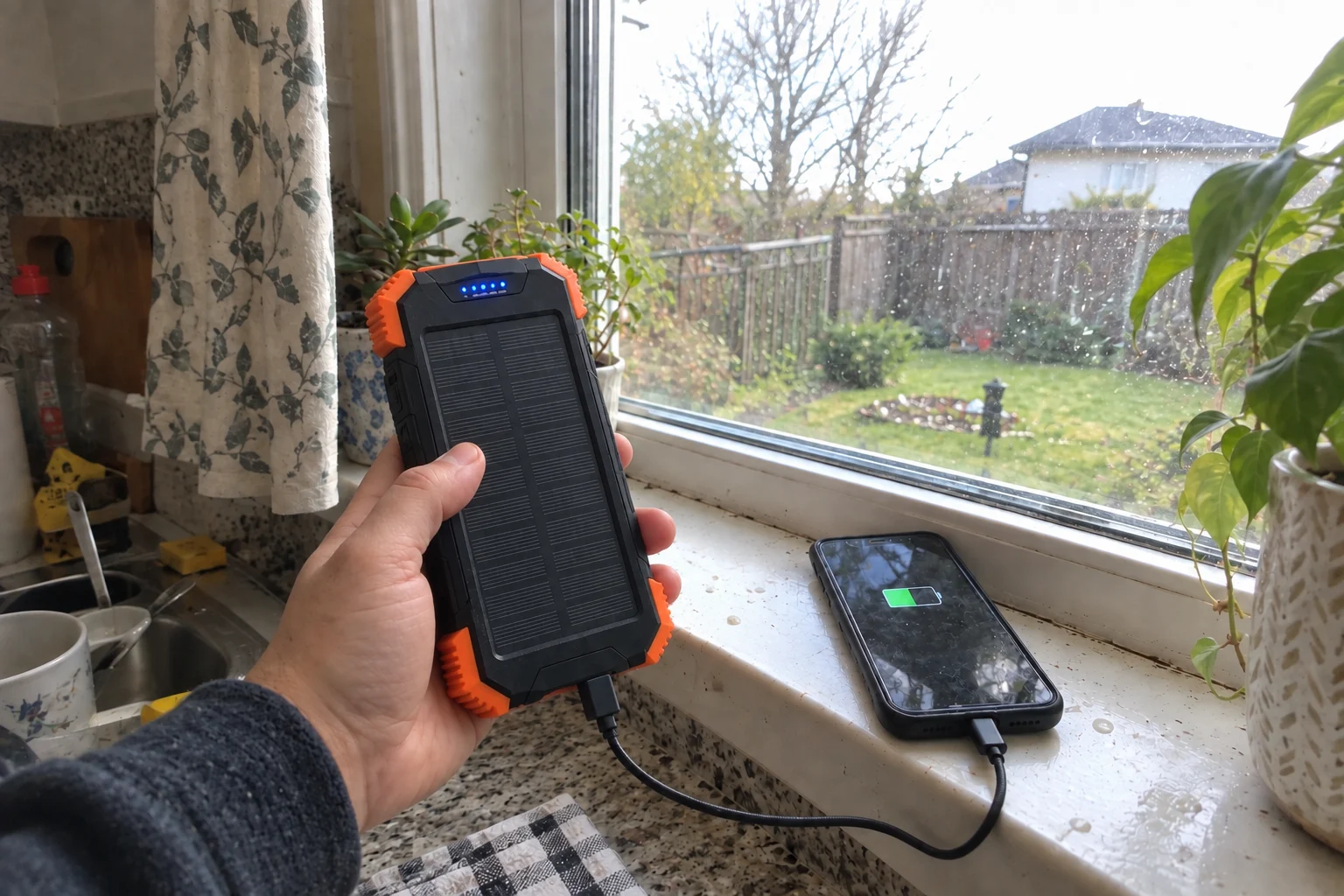
✓ Charged on day one. Charge it once from the wall and it holds that charge in a drawer for 6 months.
✓ Refills from daylight. Set it in the sun and the built-in solar panel takes power back, with no outlet and no fuel.
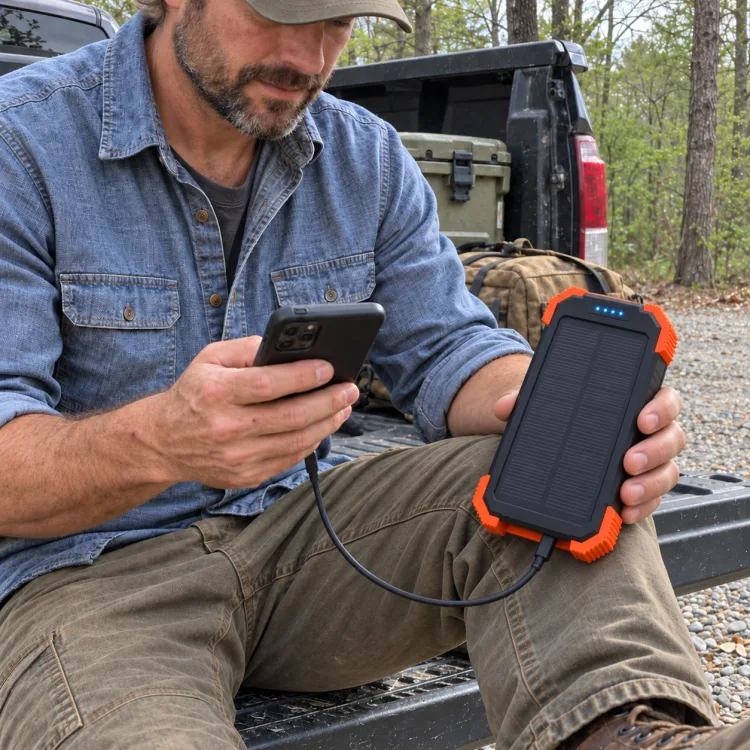
✓ Fits in your hand. It's about the size of a paperback, so it goes wherever the signal is.
✓ One button. Press it and plug in the phone. It's simple enough for anyone in the family.
"It'll be dead by the time I need it." That's what everyone assumes. Here's what happens when you take one out of the drawer after 6 months:
It charges up to 3 devices at once, takes a dead iPhone to about 65% in 30 minutes, has a flashlight, compass and it's splashproof and shockproof.
And unlike emergency gear that costs hundreds of dollars, it's something you can put in every family member's hands.
Because when an emergency happens, access to power shouldn't be reserved for governments, institutions, or people with unlimited budgets.
It should be available to everyone.
What people say after the power actually went out
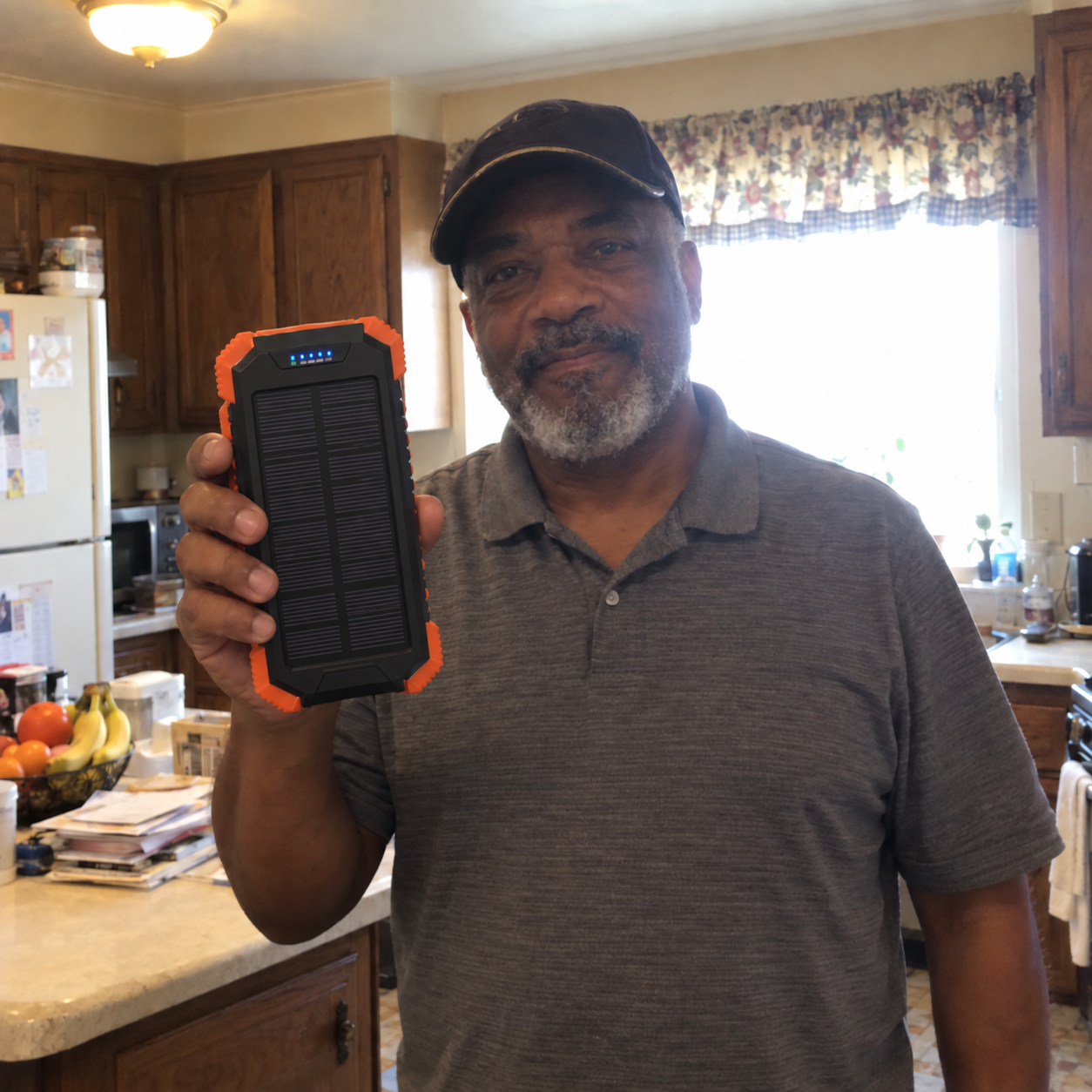
"The solar panel actually works"
"I'll admit I thought the solar panel was a gimmick. During the outage I left it on the windowsill, and it kept topping itself back up every day. No outlet or generator needed. That's exactly what I bought it for."
Curtis J. · Verified Buyer
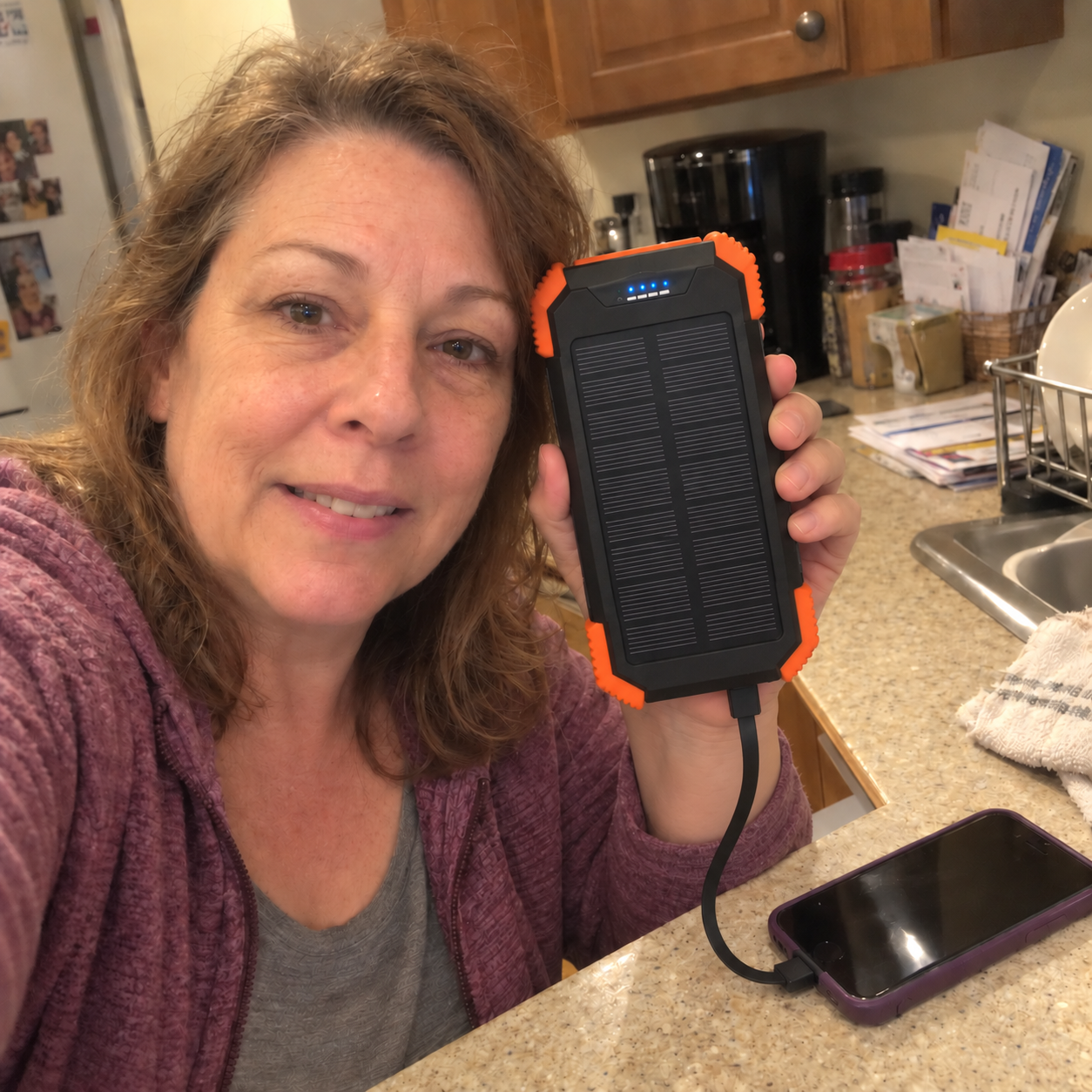
"Kept both our phones alive for 3 days"
"Ice storm knocked out our power for 3 days. Last time this happened my phone was dead by the first night. This time I kept mine and my husband's going the whole time. Ordered a third one for my mom the day the lights came back on."
Karen M. · Verified Buyer
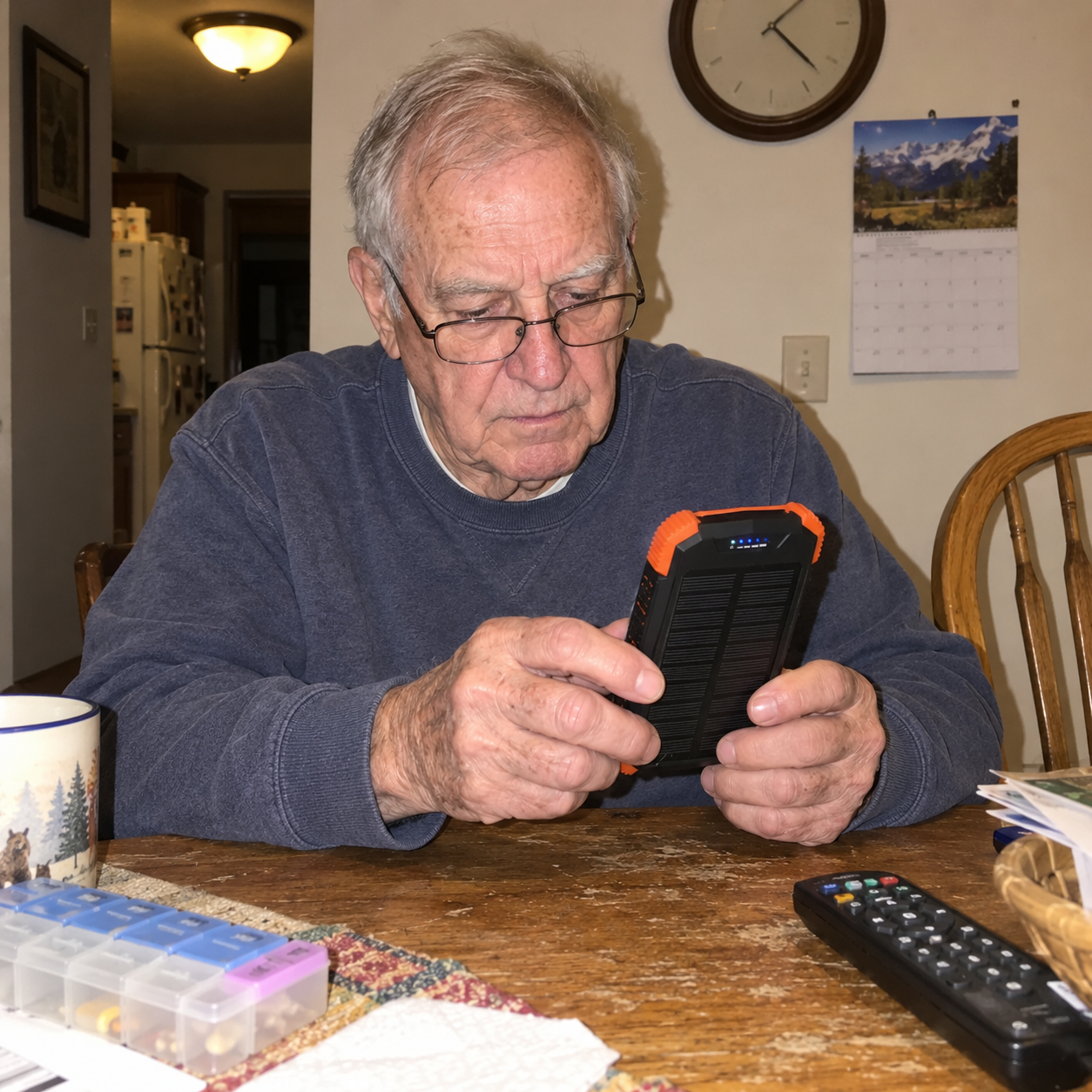
"My dad called me during the outage"
"My dad is 78 and lives by himself. I gave him one, showed him the button, and put it in the drawer next to his flashlight. When his power went out in August, he called me. That's all I wanted."
Daniel R. · Verified Buyer
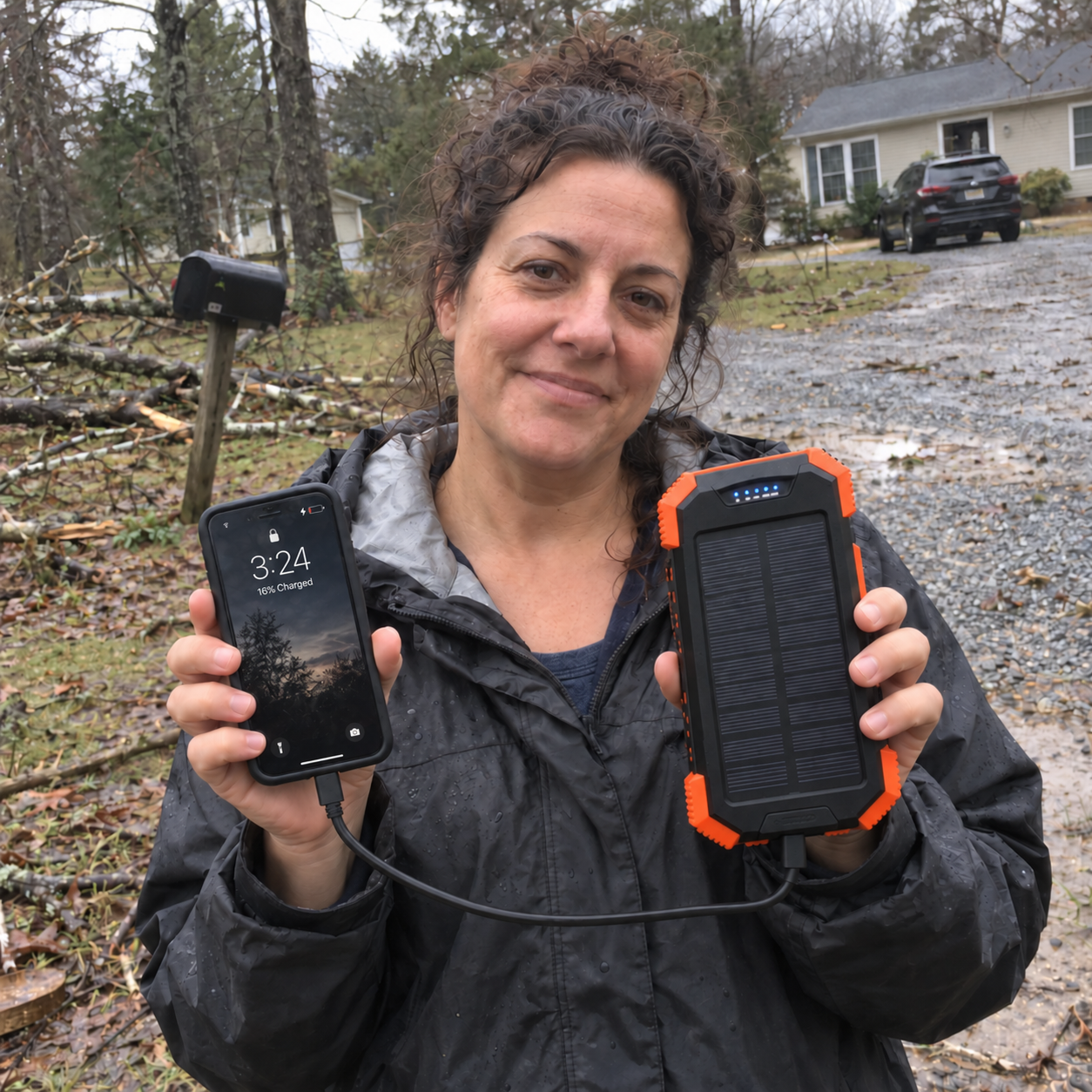
"Texted my sister when every tower was down"
"After the hurricane there was no service for days. I walked to the end of the driveway and texted my sister through the satellite on my phone. That drains the battery fast, so this thing kept my phone alive the whole week."
Angela W. · Verified Buyer
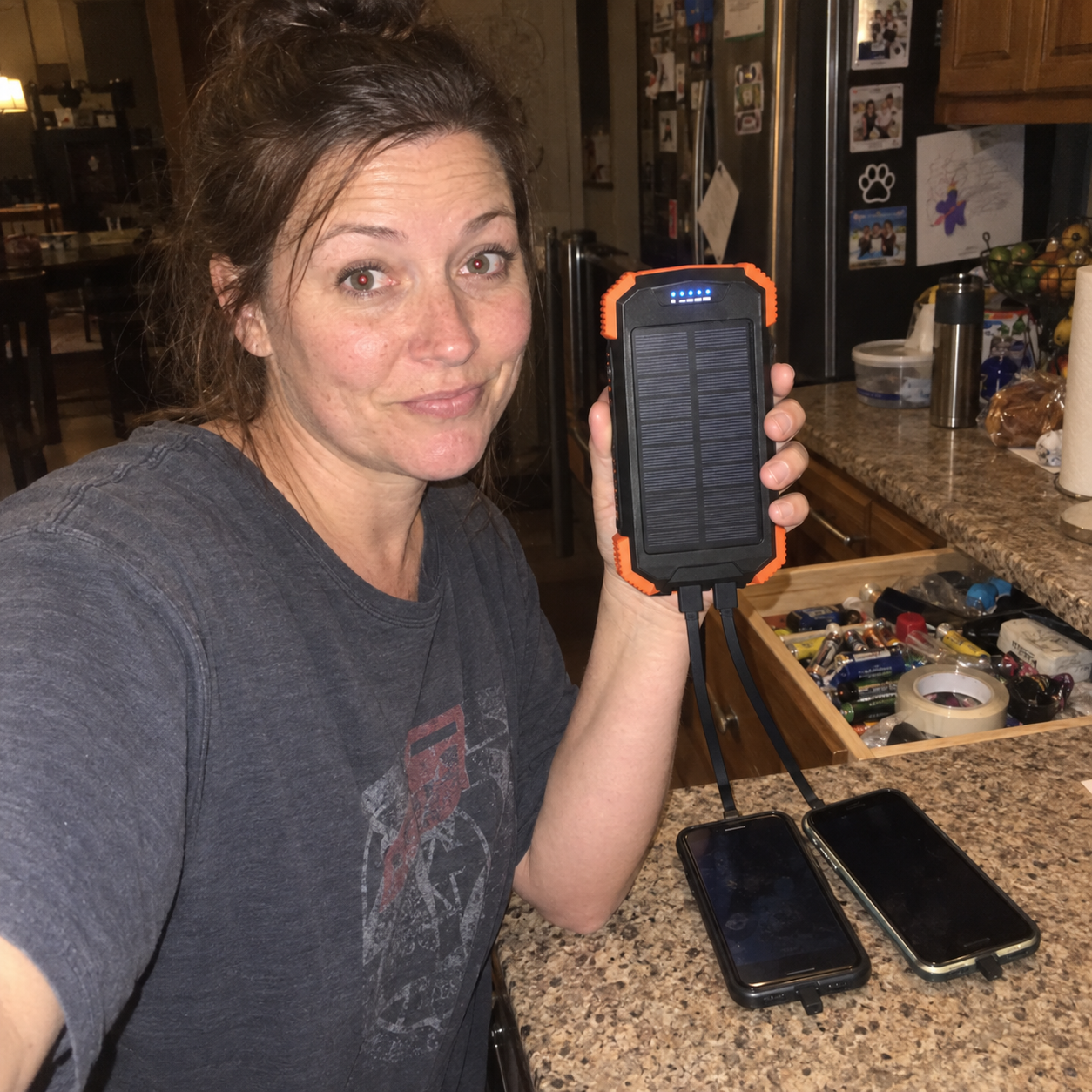
"4 months in a drawer, still fully charged"
"Honestly forgot I even had it. It sat in our junk drawer from March until the power went out in July. Pulled it out, pressed the button, all four lights appeared. Charged both our phones that night."
Trish B. · Verified Buyer
One for Every Person You'd Worry About
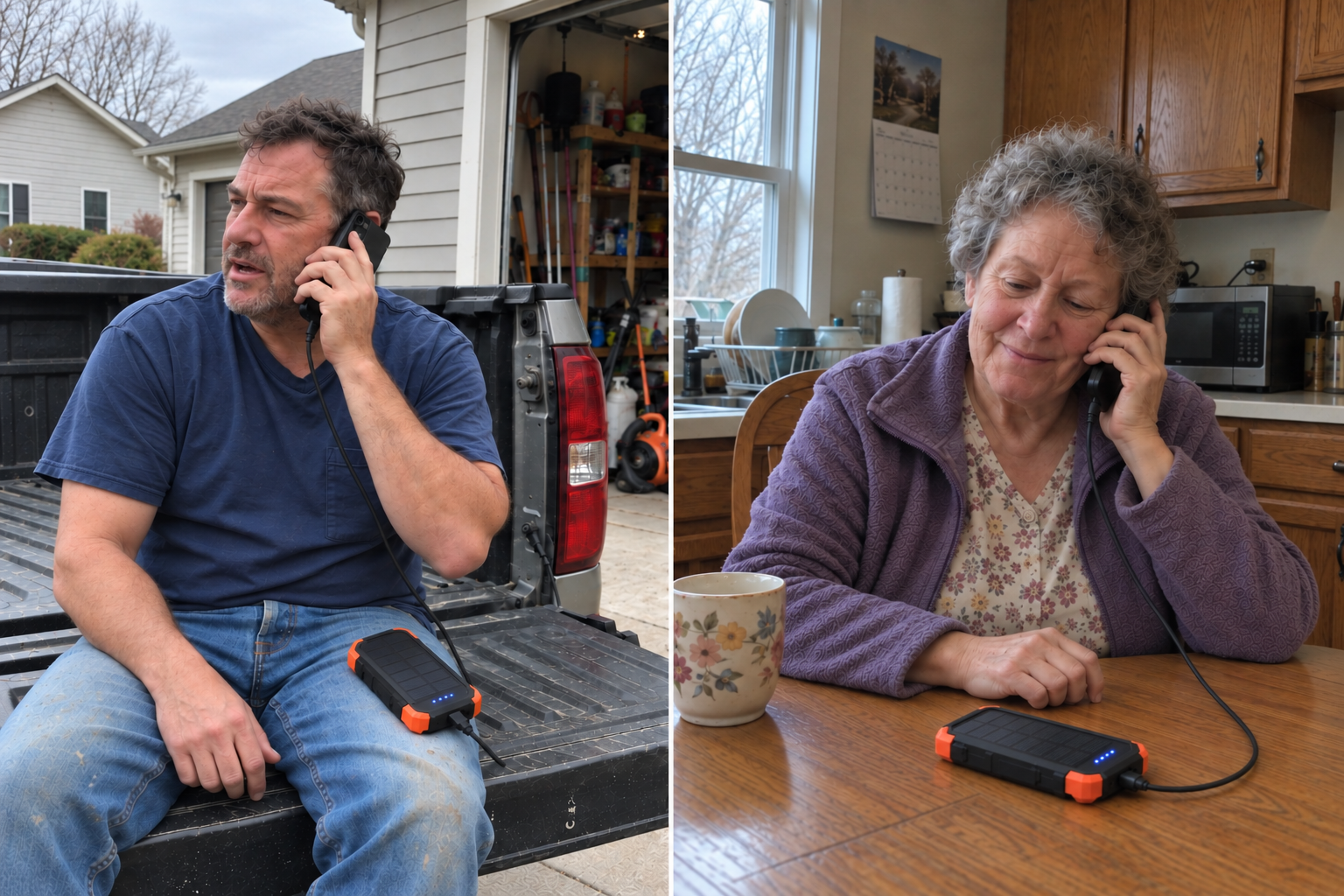
It takes two phones to make a call.
Yours can be fully charged. But if your mom's phone died the first night, the call never goes through, and you're back to staring at a screen, wondering if she's okay.
That's why the officials in Sign #4 didn't buy one.
They bought one for every person they'd need to reach.
That means your parents, especially if one of them lives alone. Your kids, wherever they are when it happens. And one for the car, in case you're not home.
Then when the power goes out, everyone's phone stays on.
Your mom picks up. Your son can text back that he's okay.
A generator can cost well over $1,000, and it only helps the house it's parked at. For a fraction of that, everyone you love can reach you.
1 for you
3 for you, your parents and your kids. Buy 2, get 1 free.
5 for the whole family: your household, your parents across town, and the car. Buy 3, get 2 free.
You Don't Have to Believe War Is Coming
Maybe the talks with Iran work. Maybe none of this ever reaches your street.
I hope it doesn't.
If it doesn't, your power banks spend their lives charging phones on road trips and camping weekends. Fine by me.
But if it does, you want to be the person who already has one in the drawer.
Not the one who realizes they needed it the day they needed it.
Because by then, there's nothing left to buy, and no way to call anyone to ask.
Readiness happens before the call, not after it.
You can't control foreign governments.
You can't control the power grid.
And you can't control when the next emergency hits.
But you can control whether your family can reach each other when it does.
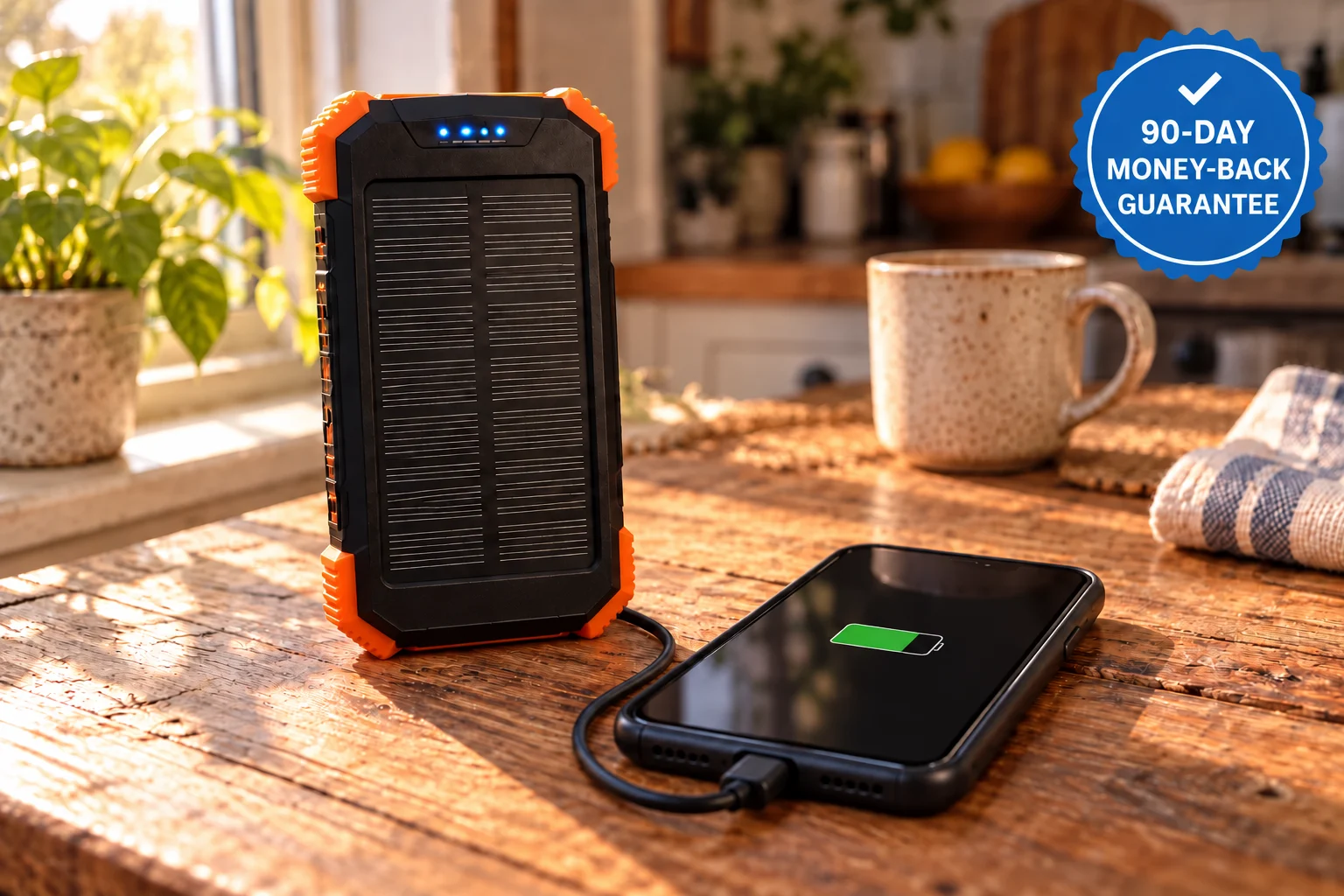
And you can do it without taking any risk. Every order comes with a 90-day money-back guarantee.
Charge it, plug in your phone, put it in the drawer. If you're not happy with it for any reason, send it back and get every dollar back. No questions asked.
ONE FOR EVERY PERSON YOU'D WORRY ABOUT
BUY 2, GET 1 FREE
Every time war or a blackout hits the news, people rush to get backup power for their families, and it goes fast.
You've seen it with every big storm: by the time it's on the news, the shelves are already empty. It's the same every time the headlines about Iran get worse.
If the button below is still showing, there are still units left at this price. Once this shipment is gone, there's no telling when the next one will arrive.
Order today and they're in your family's drawers before the next headline hits.
Covered by our 90-Day Money-Back Guarantee